Bookmark and Share
Join Our Email List
Email:
For Email Newsletters you can trust

Rabbi Arthur Segal’s love of people, humanity, and Judaism has him sharing with others “The Wisdom of the Ages” that has been passed on to him. His writings for modern Jews offer Spiritual, Ethical, and eco-Judaic lessons in plain English and with relevance to contemporary lifestyles. He is the author of countless articles, editorials, letters, and blog posts, and he has recently published two books:

The Handbook to Jewish Spiritual Renewal: A Path of Transformation for the Modern Jew

and

A Spiritual and Ethical Compendium to the Torah and Talmud

You can learn more about these books at:

www.JewishSpiritualRenewal.org
ALL ENTRIES ARE (C) AND PUBLISHED BY RABBI ARTHUR SEGAL JEWISH SPIRITUAL RENEWAL, INC, AND NOT BY ANY INDIVIDUAL EMPLOYEE OF SAID CORPORATION. THIS APPLIES TO 3 OTHER BLOGS (CHUMASH, ECO, SPIRITUALITY) AND WEB SITES PUBLISHED BY SAID CORPORATION.
Religion Blogs - Blog Rankings

Saturday, January 26, 2008

Talmudic Discourse: Pigeon Racers,The Producers,+ Sanhedrin 24B

 
Shabbat Shalom:
 
''There is nothing new under the sun.'' King Solomon taught, and any sin or defect of character we read in the magazines or newspapers or watch on TV has been done before in some variation, and chances are our Sages have discussed it.
 
Yes, pigeon flyers are ineligible to be judges or witnesses as per the Mishna in Tractate Sanhedrin Bavli 24a, regardless if Sports Illustrated calls it a 'sport'.
 
Also ineligible to be judges or even witnesses at dice players, those who lend with interest, and sheviis merchants. (Sheviis are fruits grown during the Sabbatical year when we are to let the land rest and only use produce that we gathered in the year before).
 
Pigeon racers are ineligible not only because they are gambling, but because they also use pigeons with weights on them, so they can fly only as high as their neighbors roof top roost, and lure the neighbor's pigeons away. Further pigeon racers tend also to be involved with cock fighting and other forms of animal bating, which the Rabbis in the Gemorah found abhorrent.
 
All of those that the sages found ineligible, while on its face, society today, turns a blind eye, and sees nothing wrong with those who play games with dice, or who   lend or even borrow with interest,  the sages all saw this as a form of theft. Its part of ''the something for nothing mentality''. And these folks, they believed, could be easily bribed, or thinking selfishly while judging or testifying and could not be trusted in a court. (T. Sanhedrin Bavli 24b- 25b).
 
It was not by a lark (horrible pun) that Mel Brook's 1968 movie The Producers had the Nazi play- write Franz Liebkind, as a pigeon racer. 
 
"LIEBKIND
                   (looking up)
            Oh joy of joys!  Oh, dream of
            dreams!  I can't believe it.
                   (he turns to the pigeons)
            Birds, birds, do you hear?  Otto,
            Bertz, Heintz, Hans, Wolfgang, do
            you hear?  Ve are going to clear
            the Fuhrer's name.  Fly, fly,
            spread the words.

HE OPENS THE CAGES AND SETS THE BIRDS FREE."
 
It must be tough to get a Bet Din in Vegas.
 
Shabbat Shalom,
Rabbi Arthur Segal


"Pigeon racers are considered ineligible to be witnesses or judges (B.
Sanhedrin 24b).  Check out this week's edition of Sports Illustrated for a
long article profiling pigeon racers.  Wonders never cease."


Friday, January 25, 2008

Talmud Discourse: It is better to take refuge in the LORD than to trust in man.

 
 Shalom RaJuZA and Talmudim:
 
Indeed, Kein Y'hi Ratson, May it be G!d's will, that we are always blessed with excellent teachers, in Zion, who challenge us with their questioning. Todah!
 
The Talmud  Yerushalmi Tractate Berachoth 1:1 indeed discusses the  Kohan Benedictions.
 
Y'varech'cha Adoshem v'yishm'recha
Ya'eir Adoshem panav eleicha vi'huneka
Yisa Adoshem panav elecha v'yaseim l'cha shalom.
 
While I am not a poetry expert, It has been posited by sages past that this is a poetic construct, of three lines, of three, five and then seven words, in each lines, and 15, 20 and 25 words in each line, producing a holy triangle.
 
The middle words of each line, the sages teach, holds the body of the prayer.
 
''May the L-rd bless you and watch over you.
Ye va rehk Adonshem yish me re kha

May the L-rd cause His countenance to shine to you and grant you favor.

Ya er Adoshem pa nav e lei kha vi khu ne ka

May the L-rd raise His countenance toward you and grant you peace."

Yi sa Adonshem  pa nav e  lei kha ve ya  sen le kha sha lom.

May G!D always be keeping His face raised towards us, or as I have opined in the past, He always does, it is we who turn our backs on Him.

Now, moving from this point, we  can see why the Rabbis in Eretz Israel writing their Gemorah, chose to use three consecutive verse of Psalms to answer each of the lines of this Cohanic Blessing, instead of the more traditional, "May it be G!d's will.'   Rabbi Akiva tells us in the  Mishna Pirkei Avot 3:19  that everything is in G!d's  will except one thing, and that  is freedom of choice to accept G!d. So they would use verse to emphasize this point. They would use poetry to match poetry.

Further the blessings promise items that are at the utmost value in Judaism. G!D's love and peace. True love and true peace. And psalms would be picked to mirror these virtues.

For the morning service, Shacharet, Psalm 103 verses 20, 21 and 23 were chosen:

 20 Praise the L-RD, you his angels,
       you mighty ones who do his bidding,
       who obey his word.

 21 Praise the L-RD, all his heavenly hosts,
       you his servants who do his will.

 22 Praise the L-RD, all his works
       everywhere in his dominion.
       Praise the L-RD, O my soul.

Hence this Psalm is all about us doing G!D's will. By keeping His will, we are keeping our part of the Covenant of Sinai. G!D hence will keep His part of the contract, to watch Israel,  love Israel and give peace to Israel.

It is not a matter of "May it be God's will" that G!D does this. It is a matter of our will, that He will do this.

Remember also, that prayer (service of the heart)  has replaced the sacrifices at the Temple. (Talmud Tractate Taanit 2a) . But the time frame of those sacrifices are the times that we do prayer. Shacharet is our morning prayer service.... every day.

Musaf is a 4th additional service done only on Shabbat and Holy days.  So the Sages of the Talmud  Yerushalmi would pick  something different and special. They chose Psalm 134, verse 1 ,2,and 3: (which is cleverly  the entire Psalm):

A song of ascents.

 1 Praise the L-RD, all you servants of the L-RD
       who minister by night in the house of the L-RD.

 2 Lift up your hands in the sanctuary
       and praise the L-RD.

 3 May the L-RD, the Maker of heaven and earth,
       bless you from Zion.

The Musaf service is a joyous one, starting with Ashrei, 'happy" and longs for the Messiah and the temples restoration.  As sages living in a destroyed Jerusalem and an Eretz Israel under Roman control, compared to those in Babylonia, fairing  a bit better, the Temple's restoration, would seem nearer to their hearts.

Now, in looking deeper at Psalm 103, we can see that Dovid Melech is telling us that G!d's greatest gift to us is our spiritual soul. And the priestly blessings are there to protect this soul. Our souls need G!D's eternal love and peace and protection, because without it, we are just homo sapiens still emerging from our caves and not homo spiritus emerging from the desert of Sinai. This Psalm asks G!D no less than three times to protect our soul.

103:20 - By blessing G!D's angels the sages are emphasizing that G!D rules over all, as they have written, that not even a blade of grass grows without an angel helping it to do so. Sforno goes so far to equate these angels with Talmud and Torah scholars. Calling the angels mighty ones, or in some translations 'warriors', the sages compare them to Rabbis who, as the Mishna Pirkie Avot says, are truly strong who control their evil inclinations (4:1). Further, these angels and sages, do G!D's will and never rest and do not do so for a reward.

103:21- This refers to G!D's entire universe and even the stars who follow G!d's plan.

104:22 - David is speaking of the entire universe, yet asks G!D to protect our very souls, which is the distillation, of the priestly blessings, because without a soul, what good, is protection, love, and peace?

Tractate Shabbat  86a says that this psalm begins with a description of angels who 'do' and ends with angels who 'obey', harkening us back to the revelation and covenant at Sinai, where we Hebrews said 'we will do and we will obey." (Ex 24:7). At that moment 600,000 angels set two crowns on each Hebrew, one for 'doing' and one for 'obeying'. This psalm again ties into the contract, the covenant at Sinai, which the Priestly blessings, summarizes.

Psalm 134 is  short but long in wisdom. It is the last of the 15 Psalms of Ascent. As Israel rises higher and closer to G!D, G!D responds in turn. Verse one is clear that those who serve G!D are a small elite group who do so with a full heart and mind and soul. Those who do so with lip service or the occasional good deed, are not included in this group. Ibn Pacuda's Duties of the Heart of 1000 years ago, says that in order to achieve at true love of G!D, one must stop loving his worldly processions. Tractate Menacoth 110a says that those who stand in the house of G!d in the night not only  refers to the priests of times past,  (Numb 18:1-5), but to Torah and Talmud scholars ,now, who study at night to keep our traditions alive.

Verse two is actually referring to the priests who lifted up their hands and spread their  fingers in a V sign ( yes, shades of Vulcan for you Trekkies), when giving these Cohan benedictions. (Lev.9:22).[ Now a sad thing is that Jews used to pray with their hands in the air, with shouts of joy and praise, and also, did so on their knees (read Daniel), and we stopped doing so, because our Christian brothers copied us, and we wanted to look different. We even stopped bring flowers to funerals (which was done to hide the stench of the body) because they copied it from us. Silly.]

Verse three of G!D blessing us from Zion, also refers to the priestly blessing. With priests no longer available as the Temple is destroyed, Malbim says G!D some times sends his blessings thru intermediaries, i.e. Talmud scholars. So this Psalm during a prayer service, helps take Hebrewism and the cult of the priests with the Temple, now gone, and move it into Judaism, with Rabbis.

Now, I am asked what Psalm  I would use. I answer this with humility, as the most novice of a true Talmudic sage, has more knowledge and piety in his pinky finger, than I have in my entire being.

For Shacharet:

118: 6 The L-RD is with me; I will not be afraid.
       What can man do to me?

 7 The L-RD is with me; he is my helper.
       I will look in triumph on my enemies.

 8 It is better to take refuge in the L-RD
       than to trust in man.

For Musaf:

34: 12 Whoever of you loves life
       and desires to see many good days,

 13 keep your tongue from evil
       and your lips from speaking lies.

 14 Turn from evil and do good;
       seek peace and pursue it.

If I were allowed to pick a modern Psalm from a modern Jewish prophet I would pick for Shacheret: Dylan's Psalm Talking WW 3 Blues:

''Everybody sees themselves walkin' around with no one else.

Half of the people can be part right all of the time,

Some of the people can be all right part of the time.

But all the people can't be all right all the time

I think Abraham Lincoln said that.

"I'll let you be in my dreams if I can be in yours,"

I said that.''

And for Musaf: Dylan's Psalm  Subterranean Homesick Blues:

"Look out kid

Don't matter what you did

Walk on your tip toes

Don't try "No Doz"

Better stay away from those

That carry around a fire hose

Keep a clean nose

Watch the plain clothes

You don't need a weather man

To know which way the wind blows "


Shabbat Shalom,

Rabbi  Arthur Segal


Wednesday, January 23, 2008

Take lessons from trees in these dispiriting times


Take lessons from trees in these dispiriting times

Published Wednesday, January 23, 2008
 

The news is full of tragedy. Many are hurt economically or by war, or are fearful of the political future. Homelessness, bankruptcies, defaulting bonds and crashing stocks fill our minds.

A spiritual lesson is that "a person is like a tree of the field." When fortune has turned for someone, and they have lost all hope and are despairing, then they should ponder a tree in winter. Its leaves have fallen, its moisture has dried up, it is almost a dead stump in the ground. Then suddenly, it begins to revive and to draw moisture from the earth. Slowly it blossoms, then brings forth fruits. People should learn from this not to despair, but to take hope and have courage, for they, too, are like a tree.

Jan. 22 marked one of the four Jewish new years -- Tu B'Shvat, the New Year for Trees. It celebrates the rebirthing of trees in the midst of winter, the Kabbalistic reawakening of divine energy with God as the tree of life.

This holiday is the first Earth Day. The Talmud declares: "If you have a sapling, and someone says that the Messiah has come, complete the planting, and then go welcome the Messiah."

The idea of the importance of having faith and moving forward, as well as being stewards of the earth, is as old as Judaism itself.

Rabbi Arthur Segal

Hilton Head Island


Start the year off right. Easy ways to stay in shape in the new year.

Monday, January 21, 2008

Reader's Comment on "A Wasted Friendship"

 
Very interesting post by Rabbi Arthur Segal. (Talmud Discourse: A Wasted Friendship )
 
As a psychiatrist one of the important points I see in Jewish ethics is the emphasis on living in peace, quickly settling our differences and not letting the sun go down on our wrath.  Very good advice.  As Arthur pointed out, long term "feuding" can kill you.  And that was not an apocryphal story; it happens every day.
 
I was engaged to a girl in college whose father ran a small coal hauling business and lived on some land in the country.  He had a nice field on some "bottom land" below his house by a creek that he had allowed to lay fallow for years.  Then one year when union strikes disrupted his business he decided to farm it again and raise some money selling corn.
 
As farmers often do, he decided to take out a crop loan secured by the land for his seed and the cost of renovating his equipment.  Of course, he had to have the field resurveyed.  Then the trouble began.
 
It seems his neighbor, whom he did not like very much, had fenced in his field many years before and accidentally built the fence 10 feet over on his neighbor's land.  He made a mistaken measurement.
 
So our new farmer demanded he tear down the fence and stop planting crops on that strip.  No results there so the lawyers were called in.  That is where my friend's dad found out about the legal principle of estoppel.  You do not have a legally enforceable claim if you tacitly allow someone to encroach on your land for years and say nothing.  The case was not a slam dunk.
 
Counter arguments were filed and the lawsuit dragged on and on.  The two men yelled at each other across the fence and saluted each other with extended middle fingers whenever they met on the road. 
 
That summer my girlfriend got a sad call from her mother.  Her father's diabetes had worsened step by step during the whole feud to the point he could not control it even with adding insulin.  And he died in his early 60s from a stroke.  About 6 months later, the neighbor died of a heart attack.  Chronic anger will kill you.
 
BTW, it took the widows a couple of days to work out a compromise after the second husband died.  They tore down the fence, hired a man to work the fields and split the profits according to their percentage of the acreage.
 
Tom


Start the year off right. Easy ways to stay in shape in the new year.

Friday, January 18, 2008

Please welcome Avi aka Avivit Keter

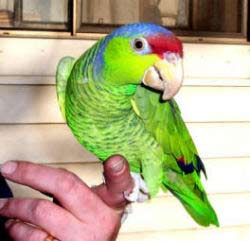
 ELLEN became a bird-mom (emah l'tsiporah) again today with the arrival of our new Lilac Crowned Amazon. He is named in Hebrew, Avivit Keter, literally Lilac Crown, but Ellen is already calling him Avi. He is darling.
Blessed art You, Lord our G!D, King of the universe, Who has such beauty in His world.
Thanks again to those of you who expressed  condolences to us when Tookee our parrot of 11 years passed in mid-December.
 
If we have not already wished you a happy new year, may 2008 be  a year where we are all blessed with a peace from Providence surpassing all understanding.
 
Shalom, love and a multitude of blessings,
Arthur and Ellen


Start the year off right. Easy ways to stay in shape in the new year.

Pirkei Avot - Ethics of the Fathers

A nice ten minute calming meditative video quoting wonderful Mishnaot from Pikei Avot- Ethics of the Fathers.
 
 
Blessings,
Rabbi Arthur Segal


Start the year off right. Easy ways to stay in shape in the new year.

Thursday, January 17, 2008

Talmud Discourse: A Wasted Friendship

One of Judaism's highest values, besides life itself, is Shalom. Without peace, both inside us and about us, we cannot even enjoy the gift of life that G!D has granted us.

Yet as flawed humans, we will continue to find ourselves in situations that detract from our serenity. At those times, it is imperative to draw upon the strength and wisdom that G!D provides us not to make matters worse, and to remember the teachings of our sages, and learn from their errors.

The Talmud tells the story of two friends who let an argument get in the way of their friendship. It is sad tale. It is from Tractate Bavli Bava Metzia 84 A.

Rabbi Yochanan who was becoming a respected Talmudic scholar and would eventually help redact the Yesushalmi Talmud was swimming in the Jordan River near his home in the Galilee. The Talmud relates many times how handsome Yochanan was.

Another fellow jumps into the Jordan. Yochanan recognizes him as Shimon ben Lakish, a gladiator and a bandit, as well as a Jew. Yochanan says to this muscular man : "Your strength was meant for Torah!"

"And your beauty was meant for women!" replied the robber.


"Do Teshuva, return to the Torah of your youth and you can marry my sister, who is even more beautiful than I !" countered Rabbi Yochanan.

The bandit, Shimon, agreed, and for 70 years these two men, now brother-in-laws, become Talmud study partners. The great Yochanan called Shimon his "right hand."

They argued about every Mishna but they were true friends.

Until the fateful day arrived. The question being discussed was : When can a sword, SAYIF , knife, SAKIN , a long knife, PAGYON  , spear , ROMACH , a hand sickle, MAGAL YAD, sickle for harvesting ,MAGAL KATZIR , become ritually unclean,(tamay)? 

All the rabbis agreed that these items can become ritually unclean  when the smith  is finished making them.

The question then was asked: " when is the manufacturing process complete?"

The younger rabbis turned to the elder rabbis Yochanan and Shimon for the answers.

 Sure enough, an argument ensued. Rabbi Yochanan said, "They can become ritually unclean from the time they are shaped by fire in the furnace." MISHE'YETZARFEM B'CHIVSHAN


Rabbi Shimon said, "They can become ritually unclean only after they have been polished with water." MISHE'YETZACHTZECHEN B'MAYIM


For those of us blessed to have studied and continue to study Talmud, we note an error in both rabbis' opinions.    The Mishnah on vessels and utensils (Kaylim) states when the manufacturing process is considered completed for each kind of knife or bladed object. Yochanan and Shimon's opinions disagree with the Mishna.   
 
"Well, a bandit surely knows banditry!" LISTA'AH B'LISTEYUSEI YADA exclaims Rabbi Yochanan, in response to Rabbi Shimon's answer. He brings up Rabbi Shimon's past for which he has certainly has done teshuvah (amends).


"What good have you done for me?" queries Rabbi Shimon. "Before, they my fellow robbers - called me, Rebbi, and here in the Yeshiva - they call me, Rebbi." (When Shimon was a bandit, he was the head of  a tribe of bandits).


"The good I have done for you," replied Rabbi Yochanan, "is that I have brought you under the wings of the Shechinah."


Rabbi Yochanan became so upset that he could not think straight

Rabbi Shimon ben Lakish became deathly sick from this argument. CHALASH REISH LAKISH

While Shimon lay dying, his wife ran to her brother. She begged Yochanan to pray for his friend Shimon. Rabbi Yochanan refused.

"Do it for his children so they will not become orphans."

Rabbi Yochanan answered by quoting the prophet, Jeremiah  (49:11), "She has left orphans, I will support them." AZVAH YESOMECHA, ANI ACHAYEH.


Yochanan's sister, Shimon's wife, yelled "Do it so I will not become a widow!"


Again her brother replied with a quote, the remainder of the verse from Jeremiah, "Your widows will trust in me." V'ALMENOSECHA ALAI TIVTACHU.


Raish Lakish died. NACH NAFSHEI D'REBBI SHIMON BEN LAKISH .

Rabbi Yochanan was very remorseful.HAVAH KA MITZTA'ER REBBI YOCHANAN BASREI TUVA. He had difficulty studying. Rabbi Elazar, the brightest student was sent to study with him.  Every time Rabbi Yochanan would say something, Rabbi Elazar would quote a bit of Mishna material to support it. He was the ultimate ''yes man."

Yochanan,  enormously frustrated, said to Rabbi Elazar, "Are you like Shimon?  Shimon would give me 24 questions and I'd give  24 answers. This is how  Talmud grows. All you do is support my opinion.'' Rabbi Yochanan turned away and began to cry. "Where is Shimon ben Lakish? Where is Shimon  ben Lakish?" He asked over and over again, screaming, HAVAH KA TZAVACH, until he became totally confused and lost his mind. AD D'SHAF DA'ATEI MINEI.

The Rabbis prayed that God have mercy and compassion for their colleague, Rabbi Yochanan. As a result, he, too, died.

What is the Talmud trying to teach us? The story of  a fight, literally to the death, is absurd. But when we look at our own lives, haven't we have arguments with people, even family members, over similar stupid things?

These two rabbis are not arguing over knives. They are arguing over Teshuvah, repentance, forgiveness.

You see, a knife cannot not become ritually impure. Only something that is considered ritually pure (Taharah) can become impure.

The question therefore is when does someone who returns to G!D, what we call a Ba'al Teshuvah, finish the process of amends making? When does a Ba'al Teshuvah become "taharah" so that this person can do something so profane to make themselves back to the way they were before they changed from their misguided ways?

The Teshuvah process is completed, according to Yochanan, when the past life has been burnt away making  a new person. 


The  process is completed, according to Shimon, (the Ba'al Teshuvah) when the person has been cleaned by water. Water is one of the Talmudic symbols for Torah. Even if the Ba'al Teshuvah still has elements of his past days, if he has adopted the yoke of Torah, and Mitzvoth, his Teshuvah is complete.

Yochanan bringing up Shimon's old knowledge of knives after all of these years is cruel. He is saying to Shimon that with all of his Torah and Talmud study,with all of his being a good husband to his sister, and with all of his mitzvoth, he is still a bandit.

Yochanan believes there is no life but a life ''of Torah''. He taught in Mishna Pirkie Avot  (5:22), "Turn the Torah over again and again, for everything is in it." Anything outside the world of Torah is unclean and impure. Yochanan lives in a world of white and black. Torah or not Torah. Pure or impure.

Rabbi Shimon lived a life "with Torah." Being a Jew, in modern terms, does not mean giving up the arts, or sports, or having non-Jewish friends (as long as they respect our religion and are not trying to covert us). We can live in a world of black and white, but that is mostly in shades of gray, using Torah and prayer to help us do what is right and just in G!D's eyes. Shimon's knowing about knives after 70 years of Talmud study, no more made him a bandit, then a Rabbi telling a mildly ribald joke to a group of adults makes him a pervert.

Yochanan's lament of  "Oh, Shimon ben  Lakish! Oh, Shimon ben Lakish! Where are you now?!" is too little, too late. It is too late to say, "I am sorry." It is too late to say," I was wrong." It is too late for Yochanan to do teshuvah, to make amends, to Shimon as he is dead.

Seventy years of Talmud study, along with being an author of the  Yesushalmi Talmud, and an angry moment is for what Yochanan is remembered.  Anger is an issue that the Sages discuss quite thoroughly. The Talmud [Bavli Tractate Nedarim 22 A,B] offers a number of varied teachings about anger: The Shechinah   is of no importance to those who get angry; one who gets angry forgets that which he has learned; all types of Gehinnom (Hell) rule over a person who gets angry. Elsewhere in the Talmud [Bavli Tractate Pesachim 66B], Rabbi Shimon ben Lakish taught that if a chacham (wise person) gets angry, his wisdom will leave him. Little did he know that he was forecasting his own death from the harsh words of his friend and brother-in-law, Rabbi Yochanan.

We can quote all of the Torah, Talmud, Midrash, Bible, we want. We can teach it to our children, or visit folks in hospitals and old age homes, and read Bible stories to them. We can even do an appointed time bound mitzvoth, like cooking and serving food to the needy, on a specific day and time. We can write checks to charity (tzadakah) or to our synagogues. But if we truly do not live a life ''with Torah", and are just living a life "of Torah," or ''using Torah'', we are only fooling ourselves. 

Let us not make the errors of Yochanan and Shimon. Let us heal wounds with friends and family. Let us be like the Talmudim (disciples) of Aaron, loving peace, (ahavath shalom), pursuing peace (rodef shalom) and bring people closer to Torah ,G!D, and to one another.  

Shalom v'brachoth:

Rabbi Arthur Segal


Start the year off right. Easy ways to stay in shape in the new year.

Wednesday, January 16, 2008

If anyone says, "I love God," yet hates his brother, he is a liar.

 
Dear S-----------------
 
In reference to your below game in which your friends send you emails describing you in 'one word,'
 
It is not so important what our friends think of us, but if we are rigorously honest with ourselves and are devoted to trying to do what is right and good in G!d's Holy Eyes, it is what G!d thinks of us.
 
Both the Rabbis of the Talmud, which precedes the New Testament by 500 years, and John state:'' 20If anyone says, "I love God," yet hates his brother, he is a liar. For anyone who does not love his brother, whom he has seen, cannot love God, whom he has not seen. 21And he has given us this command: Whoever loves God must also love his brother. (1 John. 4:20-21).''
 
Hence since all of us fail at the above, we are all liars and hypocrites. This is what G!D thinks of us. What our friends say doesn't matter.
It easy to love a friend. Where G!D calls on us to be our best, is to love those equally, who are not part of our inner circle. This is why the command of ''love your neighbor as yourself '' is followed with 'I am G!D." 
This is an oft overlooked phrase of the passage: I am God: "Let your love for  Me overcome your hatred for him, and keep you from taking revenge; in this way love vanquishes hatred, and peace will come  between you. This is the way of Torah, "whose ways are pleasant,  and all of whose paths are peace (Proverbs 3:17)".(Rabbi Yosef Bechor Shor)
 
 We have a way out however. Paul tells us this, as do the rabbis in the Talmud, and its making amends. It is not just a matter, Paul and the Rabbinic sages before him explain, of asking G!d for forgiveness, but we must amend to the  person we have snubbed, hurt, left out of our clique, not responded to his/her emails or calls of greetings, etc, especially when we are taught to ''greet each person cheerfully.''
 
There's a story in the Talmud, Masechet Derech Eretz (Chapter 4), which relates that once Rabbi Shimon ben Elazar was coming   from his teacher's house, and he was riding leisurely on his horse by the seaside. A certain man chanced to meet him, and the man was exceedingly ugly. Rabbi Shimon said to him, "Raka (simpleton), how ugly are the children of Abraham our father." The other man replied, "What can I do for you? Speak to the Craftsman Who made me." Rabbi Shimon immediately dismounted from his horse and bowed before the man and said, "I apologize to you, forgive me." He replied to him, "I will not forgive you until you go to the Craftsman Who made me and say, "How ugly is the vessel which You have made."

Rabbi Shimon walked behind him for three miles. When the people in town heard of the arrival of Rabbi Shimon, they came out to meet him and greeted him with the words, "Peace be unto you, rabbi." The other man said to them, "Who are you calling rabbi?" They answered, "The man who is walking behind you." Thereupon he exclaimed, "If this man is a rabbi, may there not be any more like him in Israel!" He told the people the whole story, and they begged him to forgive the rabbi, and he agreed, only on the condition that he never act in this manner again.

The Holy One created all kinds of people. We have to accept, welcome, and love that diversity God created, or else take those issues up with the Creator, not with the person who was created. Diversity is what makes each of us special. Inclusiveness, welcoming, and involvement with the diverse people who share this earth with us make us a holy community. Uniformity is destruction; diversity is our strength and our greatest hope.

It is not up to us to judge people based on the color of their skin, religion, or their gender, or their sexual orientation. If you have a problem with the fact that a person is a Jew, a woman, gay, or of a different skin color, discuss your problem with the One Who created people to be different, if you're so inclined. But remember that your problem is not with the created but with the Creator.
 
I have a friend,with a friend, whom he loves like a sister. For years he was there for her. In between husbands, thru bad marriages, problems with kids, sibling, her parents, etc.  And he, as a G!d loving Jew, believing in the Mishna's command of being a ''rodef shalom'', a pursuer of peace, spoke to her mom, to heal the rift. And he cried tears of joy for her when she finally remarried, this time looking like its blessed. And he loves her husband as if he is his brother.
 
And poof, never being told why,  even an email of Happy New Year, or a telephone call, goes unanswered. It is hurtful to him. He could say, but  he will not : "If this woman is a Christian, may there not be any more like her in Christendom!," but instead he prays each day for her. Jesus, as did the Rabbis of the Talmud, as well as Moses, taught that ''standing idly by'' while a person is suffering is immoral.
He knows that in G!D's eyes, he is right with Him. The problem lies with in her heart. Hence his prayers for her, and not any anger. Confusion, a bit. But in G!d's time, answers will come. He knows she is involved with a fundamentalist church now, and he knows their stance on Jews.
 
It is quite the opposite of the Jewish stance on others. Our Talmud in Tractate Sanhedrin tells us that the righteous of all nations have a equal share in the world to come. We do not tell non-Jews that they are going to hell if they do not believe. We do not even tell non observant Jews that they are going to hell. We are concerned about our behaviors towards one another in 'this' life.
 
Allow me to end, by mentioning the Talmudic parable of the chassida, or stork. Twice in the Torah we are given lists of birds, which according to the dietary laws, are not to be  eaten—the chassida is mentioned as an unkosher bird in Leviticus 11:19 and  Deuteronomy 14:18. 

The great medieval Biblical commentator Rashi, following an earlier Talmudic source, asks, "Why was this bird called chassida? Because it  does acts of chessed (loving-kindness), in sharing its food with other storks."

A 19th century rabbi asked, "Well, then, why isn't it Kosher? Because it does acts of loving-kindness with other storks, only with other storks and not with any other birds."

I would like to suggest that the stork here may be a symbol for religious  communities—their great strength, but also their problematic nature. The strength of closely-knit religious (or, for that matter, ethnic or other) communities is the mutual help and support they give to members of the in-group.

Unfortunately, they do not always behave in such humane ways towards outsiders or members of  other communities. The challenge for our religious communities is to behave towards each other like human beings, not like storks.
 
This is the lesson of Jesus, the Rabbinic sages before him, and what G!D wants for us.
 
We are better than storks. We were created in G!D's holy image. We are to love our fellow. What is hateful unto us we are not to do to another,  Rabbi Hillel teaches in our Talmud.
 
Let us no longer be liars and hypocrites in G!D's eyes, and indeed be the Christians and Jews we purport to be.
 
With shalom, and may G!D make 2008 full of peace for you and yours surpassing all understanding.
 
Love and many blessings,
Arthur
(Rabbi Arthur Segal)


Start the year off right. Easy ways to stay in shape in the new year.

Monday, January 14, 2008

The Best Gift

Are you gift shopping for a 'house warming' present?
 
The Parthian king, Artiban, once sent a priceless jewel to Rabbi Judah the Prince (135 c.e. - 220 c.e.), who was the compiler of the Mishna and one of the wealthiest Jews.
 
The king made it obvious that he expected something of equal value in return.
 
 The Rabbi's return gift to the king was a Mezuzah.
 
The king's reply was: "I sent you something priceless and you sent me something that can be bought for a paltry sum!?"
 
The Rabbi answered: "You sent me something that I must hire a guard to watch and I sent you something that will watch over you!" ( Talmud Yerushalmi, Peah 1:1)
 
Many Blessings,
Rabbi Dr. Arthur Segal


Start the year off right. Easy ways to stay in shape in the new year.

Tuesday, January 8, 2008

Tu B'Shvat: The Jewish New Year for Trees

 Dear Editor:
 
January 22 celebrates one of the four Jewish New Years: Tu B'Shvat, the New Year for Trees. It celebrates the rebirthing of trees in the midst of winter, the Kabbalistic reawakening of Divine energy with God as the Tree of Life: His roots in Heaven and His fruit, ourselves and the universe.
 
A spiritual lesson is that  "a person is like a tree of the field." When fortune has turned for someone , and they have lost all hope and are despairing – then they should ponder a tree in winter. Its leaves  have fallen, its moisture has dried up, it is almost a dead stump in the ground. Then suddenly, it begins to revive and to draw moisture from the earth. Slowly it blossoms, then brings forth fruits. People should learn from this not to despair, but to take hope and have courage, for they too are like a tree.(adapted from Rabbi Yisrael of Chortkov in 'Ginzei Yisrael')
 
This holiday is the  first Earth Day. The Talmud declares: ''If you have a sapling, and someone says  that the Messiah has come, complete the planting, and then go welcome the Messiah.''   "If you find the land full of  good things, you should not say, 'We will not plant.' Just  as you found trees planted by others, you must plant for your children. As you found trees, plant more, even if you are old."
 
The importance of humankind being stewards of the Earth is as old as Judaism itself. 
 
Shalom,
Rabbi Arthur Segal


Start the year off right. Easy ways to stay in shape in the new year.

Sunday, January 6, 2008

Talmud Discourse 25 'Yerushalmi',"Kiddush cup"

 
 Happy New Year R. Abrams and Talmudim:
 
May 08 be a year of Shalom from G!D surpassing all understanding.
 
Thank you for bringing us into Talmud Yerushalmi, or more accurately the Palestinian Talmud, or Talmud Eretz Israel.
 
In the book, Kol Ha'Tor, written by a disciple of the celebrated Vilna Gaon, the importance of studying the Jerusalem Talmud is emphasized. The author reports that the Vilna Gaon told him that in the initial stages of Messianic Redemption there would be a renewed interest in the study of both Kabala and the Jerusalem Talmud.
 
Rashi found this version of the Talmud to be on a higher spiritual plane as well. ''Rav said: As soon as man goes forth from Halachic to Scripture study he no longer has peace. And Shmuel said: It means one who leaves Talmud for Mishnah. And Rav Yochanan said: Even from Talmud to Talmud. Talmud Bavli, Chagigah, 10a ". Rashi explains, ''from Talmud to Talmud: from Talmud Yerushalmi to Talmud Bavli, since the former one is deeper'', i.e. Yerushalmi is deeper spiritually and intellectually than Bavli is. (Rashi on Chagigah 10a, d.h from Talmud to Talmud )
 
The question is posed about kiddush cup design and usage.
 
Working with the assumption, for a moment, that  the kiddush cup in question is one used for Shabbat, we can see why the rabbis asked that it be decorated, clean and full.
 
In Yerushalmi Berachot 1, Shabbat carries the same weight  as all the 613 Mitzvot. Our Chachamim explain that the 613 Mitzvot compare to the 613 limbs in a persons body. The mitzvah of Shabbat refers to a person's soul, without which all other parts of the body would be mundane. Thus Shabbat is the center of our spiritual universe, and it is of the utmost importance that we guard it well and take oneg, rejoicing in it.
 
Our kiddush cups cannot be some earthen ware mug from the cabinet, or a used jelly jar.The cup must be something special, set aside, literally, from the Hebrew root kadosh. It is decorated, as we are to wear our finest clothing on Shabbat, as well. While many Jews think that Yom Kippur is the holiest day on the Jewish Calendar, in reality, our weekly Shabbats are. Each Shabbat is like one 60th of Olam Ha Ba, the world to come, and the sages teach, that if all Jews, guard and remember, Shabbat, two weeks in a row, the Messianic age will arrive. ( I am not sure if the sages were saying that this would mean all Jews were deserving of this Age because they finally became spiritually connected, or if we just stopped our infighting, and agreed to all do something, without having rancorous board meetings).
 
The cup must be clean just as we, men and women both, were obligated to be ritually and spiritually clean, before Shabbat, by going for a dip into the mickvah. Just as the rabbis decreed that our tables that we serve our guests on, replace the sacrificial altar of the Temple (s), our Shabbat foods hence become more important than our foods on our other 6 days of the week. This harkens back to the special Shabbat sacrifices.  The sages suggested that during the week, we actually buy items that we are to use for Shabbat, making sure, that even in the poorest of households, that the Shabbat meal is something 'extra.' Hence our wine glasses are filled to the brim, as G!D's gifts to us, are always over flowing.
 
As Jews, from the name Yahudah, grateful, we are not to look at the world as a kiddush cup half empty, nor as one half filled, but as one over flowing with G!d's bounty, chesed and rachmonet for us.
 
As with all Berachoth, we are to say them with spiritual intention, kavenah. Hence, we are not to be side tracked while saying the blessing that thanks G!D for the fruit of the vine,  and immediately drink it, upon finishing the blessing.
 

(Between the recital of the benediction before eating and ingesting the food, we do not interrupt with idle chatter. Such a disruption would require the recitation of a new blessing, for the benediction previously said is rendered invalid by the interlude, according to the Talmud.

Our sages explain that certain pertinent phrases may be said in the interim, since they are not considered a digression of thought (B. Berachot 40a). Thus one who pronounced the benediction over bread but is yet to taste the food, can pass a piece of bread to someone else and say: "Take, recite the blessing." According to another sage, even if the one who recited the blessing said: "Bring salt, bring relish," the initial blessing is not rendered null. The final opinion brought in the talmudic passage allows one to even say "Mix the food for the oxen," without voiding the initial blessing. It is a commandment in Judaism to feed our animal before ourselves.)

The cup was held high, the same way the priests would hold the sacrifice high, acknowledging G!D in His heavens and for the people to see. It elevates the mundane grape and wine, into a holy act.

I will end with the why the use of the right hand.

As we have learned and studied, the Talmud, redacted in its Mishna from circa 200 CE and in its Gemorah additional form in circa 500 CE was a 1000 year old text derived from oral tradition, predating in some areas, back to Torah, perhaps. Each rabbis opinions were recorded, none were censored, and even when they were angry at each other and called each other names, this was included. In times of peace, since rabbis are humans, we read peaceful wisdom, and in times of tribulation, we can sense the bitterness in the pages.

Rabbi Aha was one of the Savorai Rabbeinu, who lived near the end of the 4th century CE. Jerusalem was vanquished by the Romans 300 years before, and Christianity, was now the state religion of Rome, who controlled what was left of Eretz Israel. Rabbi Aha loved life. The rabbinic rule forbidding dancing was ignored by him  [Bava Betsa 30] but the immodesty of concentric male and female circles, carried the day. Ignored was Ketubbot 17a, which described Rabbi Aha dancing with a woman on his shoulders. Kiddushin 82 teaches that intent and not the fact of contact, when between male and female who are not married or dating, determines propriety. This point tends to be lost on some of our Jewish sects today.

Rabbi Aha was no fan of Rome nor of Christianity, as both were oppressive  to Jews.  Rabbi Aha  declared: "there was a man, the son of a woman, who would rise up and seek to make himself God, and cause the entire world to err . . . . If he says that he is God, he lies; and in the future he will cause to err - that he departs and returns in the end. He says, but will not do . . . . Alas, who shall live of that people that listens to that man who makes himself God?" (Yal. Simeoni on Num. 23:7).

Hence the use of the right arm to raise the Shabbat Kiddush cup was significant to Rabbi Aha.  "If I forget thee, O Jerusalem, let my right hand forget her cunning. If I do not remember thee, let my tongue cleave to the roof of my mouth. If I prefer not Jerusalem above my chief joy" (Psalm 137). By remembering Jerusalem, which he could walk by and view in ruins, and by using his right arm, he helped make each Shabbat a reminder of the world to come, when the Temple would be rebuilt, in Jerusalem, and the exiled Jews, would be gathered together in 'the land.'

For liberal Jews echoing the words of Rabbi  Gustavus Poznanski , of 1841 Charleston, SC, USA,  who was moved to say "This synagogue is our Temple, this city our Jerusalem, and this happy land our Palestine," we can still find meaning in Rabbi Aba's ritual as Shabbat is a spiritual mystical time, and a time when we can step out of the secular, into the holy, and prayer and direct ourselves to do Tikun Olam, to repair the world, as G!d's human partners, for Shalom, tsadakah and chesed.

L'Chaim!!

Shavuah Tov,

Rabbi Dr. Arthur Segal


 The Yerushalmi, the Talmud produced in the Land of Israel, is something like
the ugly sister who never gets any attention when compared with the Bavli
,
the Talmud of Babylonia. So this new year, well attempt to address that
wrong.  The Yerushalmi has glories to rival the Bavli's ,so let's get
started! (She ends up being quite as pretty as her sister!)
We'll begin with something that just about every Jew owns:  a Kiddush cup.
Whether you got it when you were 13 or when you were getting married or you
collect them, the Yerushalmi has this to say about it:
The earlier sages asked:  Can the left hand help the right hand hold the
Kiddush cup when we are saying the blessing? We learn from this question
three things:
You must hold the cup in your right hand.
You must hold your hand up at least a handbreadth above the table.
You must pay attention to the cup while saying the blessing it (i.e., you
don't set it down to check the oven, for instance).
Said Rav Aha: Three things were said concerning the Kiddush cup:
It must be full.
It must be decorated.
It must be clean. (Y. Berachot 7:5)
Discussion Questions
First some words on the Yerushalmi.  There are two versions:  the Venice
edition which has all the tractates in one volume and the P'nei Moshe
edition in 7 volumes.  The latter looks more like a page of Bavli.  However,
always, in the Yerushalmi, a mishnah is called a halachah, so if you're
looking into the actual text itself, don't let that trip you up.

The only complete translation of the Yerushalmi into English is edited by
Jacob Neusner, entitled, The Talmud of the Land of Israel, in 35 volumes
from University of Chicago Press. You can buy individual volumes, so you
can
go for the tractates which most interest you.  Finally, the Yerushalmi has
Talmud on Mishnah tractates that the Bavli does not so we're in for a
fun ride!
Now, to the questions:
1. How does your cup stand up to these standards?  (I was appalled, thinking
how much silver polishing I'm going to have to do to bring ours up to
snuff!)
2. Why do you think the cup had to be decorated?
3. Why must you hold the cup in your right hand?  Why do you have to hold
it up?Enjoy! R. Abrams


Start the year off right. Easy ways to stay in shape in the new year.

Reader Comment on ''Koufax'' from ''Talmudic Discussion on Business Ethics ''

note: Mr. Appel's firm represents the Israeli Baseball league in  Public Relations. Visit him at www.appelpr.com
Shalom Mr. Appel:
 
Thank you for your below email.
 
Yes. It was indeed honorary, and Mr. Koufax  was the last player picked.
 
Koufax, 71, was picked by the Modi'in Miracle in the draft conducted by former major league general manager Dan Duquette, who heads baseball operations for the league and is a former general manager of the Boston Red Sox. "His selection is a tribute to the esteem with which he is held by everyone associated with this league," said former big leaguer Art Shamsky, who will manage the Miracle. "It's been 41 years between starts for him. If he's rested and ready to take the mound again, we want him on our team."
 
The Talmudic discourse, juxtaposing Koufax's ethics with many who seem not to have them, was written soon after his pick, but was posted, along with all of the posts, on my web site after Havdallah last evening, January 5, 08.
 
Thank you for letting me know that he did not play. I was a bar mitzvah lad during the baseball season of '65, and living in the NE, where my Jewish suburban neighborhood, abutted next to the town's "Christian Country Club" with its ''No Dogs, Jews, Negroes, Catholics" allowed sign. Koufax was a hero to us kids being taunted, daily, walking from the public school, to our Hebrew school classes, with anti-Semitic slurs being hurled at us.  In my mind's eye, Koufax has never really left that mound.
 
Mozel tov on your tenth anniversary in your business. May G!d continue to bless you and keep you.
 
Many Blessings,
Arthur Segal


Hello Rabbi; not sure what your source was, but just so it's clear, Sandy Koufax did not pitch in the Israel Baseball League this past year.  He was 'drafted' by Modi'in, but it was an honorary gesture; he was never expected to really play, and he didn't.  He said he was touched by the gesture and appreciative.
 
Marty Appel Public Relations
Celebrating 10th anniversary in 2008

100 W. 57 Street
New York NY 10019
212 245-1772
212 245-6353 (fax)
www.appelpr.com


Start the year off right. Easy ways to stay in shape in the new year.

Saturday, January 5, 2008

Talmudic Discourse 24: how to make New years resolutions stick...Jewishly

 Dear Rabbi Abrams and Talmudim:
 
I have a question. It is timely perhaps with the secular time of the year. In Talmudic Rabbinic Judaism it is a  daily concern.
 
We are read of New Year's resolutions. Many resolve to stop smoking, or stop over eating, or stop drinking, or be nicer to their loved ones, and the list is endless. And many can stick to these ideals for a month or so, but eventually fall back to old patterns.  A few lucky ones, can continue for their lives.
 
Why do we as Jews walk to flowing water on Rosh Ha Shana and throw bread into it, during the Tashlik ceremony, symbolizing casting away our defects, yet walk back up to dry land, with the same defects, resentments, and selfish thoughts, that we just supposedly cast away? Did the bread jump back into our pockets? We can symbolically clean our homes of every crumb of chometz pre Passover, but that bread in our pocket of our defects, be it Tasklik during the Jewish New Year, or during the secular New Year, doesn't want to leave.
 
What is the Talmudic step are we not performing, before Tashlik, or before making these December 31 resolutions?
 
The Chassidim say : ''The virtue of angels is that they cannot deteriorate; their flaw is that they cannot improve. Humanity's flaw is that we can deteriorate; but our virtue is that we can improve.''  We read : "Repentance: a fierce battle with the heart." [ Orhot Tzaddikim, 15C] and "Even if you be otherwise perfect, you fail without humility''. [ Talmud: Kalla Rabbati] and ''How is one proved to be a true penitent? Said Rabbi Judah: If the opportunity to commit the same sin presents itself on two occasions, and he does not yield to it.'' [ Babylonian Talmud, Yoma 86b]
 
Is that we are not doing the Talmudic steps of a complete moral inventory or a complete confession of our defects? Is it that we are missing the invaluable step of truly making teshuvah (repentance) to those we have harmed with our defects and resentments? Is it that in the longest journey in life, from the head to the heart, we truly do not find that which we state we which to cast away objectionable, and still wish to hold on to them, hence blocking that channel from our minds to our heart, but also block us from having a channel open to G!D, our Healer. Instead of being nevi (open...also the Hebrew word for prophet,) we are still narrow, (mitzriam, the Hebrew word for Egypt), and still wish to be in a bondage they we ourselves have created.
 
Is it that we lack humility, and truly do not have belief, faith and trust in G!D and try to depend on our own finite will power, instead of accessing G!D's healing infinite power, and hence we are doomed for failure, as the evil inclination, is greater than an one human?
 
I am interested in how my fellow Talmudim have grown, and continue to grow, and what Rabbi Abrams believes that Rabbinic Talmudic Judaism specifically speaks to us so that New Years resolutions, be they at Tashlik or on December 31, work.
 
Todah Rabbah.
Happy New Year.
Rabbi Dr. Arthur Segal


Start the year off right. Easy ways to stay in shape in the new year.

Talmudic Discourse 23

 
Shalom:
 
Nice medical summary of the deleterious effects of steroid use by Chavar Tom. 
 
It can be followed with an other Talmudic observation long before our sages knew of steroids.
 
Steroids, as Chavar Tom, elucidated, puffs out the one who takes them. It makes him (or her) appear bigger and greater than they actually are and hence even perform this way.
 
When the Talmud discusses stealing, it talks about cheating. Not surprisingly, Judaism condemns cheating, but our tradition recognizes that cheating involves more than breaking the rules. A Hebrew phrase used in the Talmud to indicate cheating is geneivat da'at, which literally means the theft of the mind; in other words, cheaters who intentionally mislead or deceive others to gain undeserved goodwill are considered thieves. "There are seven kinds of people who are guilty of stealing," our sages teach. "First among them are people who misrepresent themselves to others" (Tosefta, Bava Kama 7:3).
 
Certainly, a puffed up exaggerated steroid user in professional sports fits this bill, no differently than a fellow  or gal in a $5000 business suit selling junk bonds or a $200 suit selling sub prime mortgages without full disclosure to a truly understanding client. All are 'con' men or women.
 
Chavar Tom's policeman friend's advice of 'following the money' (the same advice "Deep Throat" Felt gave to Woodword and Bernstein during their Watergate investigative reporting in the early 70s), is interesting in the above context, as the Mishniac word for money or riches, (mamon..."charity is the salt of mamon" {Kethuboth 66B]) has its Aramiac roots from the same root word as 'confidence,' which of course is what a 'con' man is entrusting one with.
 
As implied in my previous post, the problem with steroid use in Baseball, if indeed Baseball is as an American as apple pie and a microcosm of the USA, is the tip of the iceberg of  a nation and its people, who might be statistically the most church or synagogue 'belonging' people, but who truly do not have 100% faith, trust, nor even belief in God, and put their 'confidence' in mamon.
 
Our kesef may record  the words "in God we trust," but our image of the American diety, has emblazoned on it, "in riches we trust." Steroid use is our athlete's version of a Wall Street broker's insider trader or our politician's stealing an election. And 'there is nothing new under the sun,' {Eccl 1:9} as theft and worship of riches, have been taking place long before men (and women)  were rounding bases.
 
Shabbat Shalom:
Rabbi Dr. Arthur L. Segal


by tshafer3661

So is it time for ML Baseball to go the way of pro wrestling?  Could happen
I guess if the sport continues to be money and ratings driven.

I remember "rasslin' " from the early days on TV in the mid 50's.  Gorgeous
George and Haystacks Calhoun.  Back in those days they actually used to know
each other around to decide who won.  Of course, they had their show stuff
but when they bashed one another on the back with a chair it was  real
chair.

I made a friend a few years ago who "rassled" on the minor league circuit in
the Deep South.  He assures me there was some improvisation of showy moves
but no choreographed bouts.  He recalls vividly getting the stew knocked out
of him in several bouts he lost.

Nowadays there is total choreography of the bout.  It starts out week before
with mock tussling and arguments between the fighters, carefully scripted to
enrage the fans.  This is where the villain gets especially villainous and
die hard fans fear he will truly defeat their champion of truth, love and
the American way.  It build to a crescendo where they do fight in the ring
sort of.  Actually they stomp beside the other guy's head and break balsa
wood chairs on each other's back.  And they practice the bouts before hand
so all the carefully panned moves including the pin for final victory come
off perfectly.

Now these guys are finely tuned athletes.  They look like big muscle bound
men but actually are very talented gymnasts and actors.  Nothing as hard to
play as a fight scene.  It is just they are no longer competitors because
the final victor is determined before the bout by management as the outcome
best designed to keep the fans flared up and increase attendance and viewing
at the rematch bout.

Of course, the pro wrestlers use steroids too, lots of them.  They feel they
need to get that massive physique.  A cop friend of mine once told me if you
want to go where the action is in a case, follow the money and the drugs.
Good advice in life I am sad to say.

An interesting part of the discussion appeared in an editorial on sports
medicine in the Journal of the American Medical Association a few years
back.  The author pointed out that steroids really have minimal anabolic
intracellular muscle building effect unless your client had a low level in
the first place.  A high level can cause growth of things like brain tumors
and liver nodules but the determinant of muscle growth is how much the
muscle is stressed and worked.

Steroids do make the athletes more aggressive so they tend to do more and
faster reps when they work out, leading to muscle growth.  However the JAMA
author pointed out that you can accomplish the same thing with a good
trainer who pushes you beyond your self perceived limits.  And this is
without the danger of medical problems down the  road or more immediate
danger of injury due to excessive exertion.


Start the year off right. Easy ways to stay in shape in the new year.

Talmudic Discourse (Jewish Business Ethics)

 
Dear Rabbi Abrams et. al.:
 
What a wonderful d'var Torah (sermonette) on business ethics (below)
Thank you!!
 
It needs to be repeated often, unfortunately.
 
While you were moved to write it by the use of steroids in Baseball, giving one an unfair advantage over others, i.e. cheating and defrauding, your d'var is apropos to those lenders involved in making mortgage loans to those who could not afford the balloon payments, or who they knew were borrowing the 20% elsewhere.
 
The days of Sandy Koufax not playing ball in game one of 1965 world series because it was Yom Kippur, have long gone. Koufax, now 71, is pitching for the Modi'in Miracles, of the Israeli Baseball League, which was formed in the spring of this year (07).
 
Our sages in our Talmud took the Torah admonition of ''not putting a stumbling block before the blind'', (Lev:19:14 lifnei iver lo sitten michshol) and said that this was clearly about business ethics. (Bava Kama 118B, Bava Metzia 5B, 75B, and Midrash Sifre Leviticus ). 
 
 We Jews have an obligation for full disclosure, even if the law of land, says we do not need to do so. Caveat Emptor, [let the buyer beware], is a Roman Pagan law, and is an anathema to Judaism.
 
We are to be rigorously honest, taking a bow to the old Kosher hot dog commercial, implying that we must go beyond the laws of the government (in that case, meat inspectors) because we yield to a Higher Authority.
 
Yet it is sad to still hear the worn out canard of the Jew being the perennial ''cheat'' in business.  I still remember the shock that ran through the audience and the gasp of my Bubbie [of blessed memory], and my mother and father, when we saw Roth's novella, "Goodbye Columbus," produced into a movie in 1969, and the nouveau riche Jewish father character, played by Jack Klugman,  stating that ''one needs a little gonef (thievery) to be in business.''
 
As you so wonderfully cited, our Talmud states that when we stand in front of Moses before the gates of Paradise, we will not be asked if we kept kosher, nor asked if we kept Shabbat, but will be asked if we were honest in business.
 
Our yetza ha ra, our evil inclination, is always chasing after us, literally to kill us. (Talmud Tractate Kiddushin 30B). The Talmud in Bava Batra 16A says it and Satan and are the same thing. Ibid 17A says that only three humans were not swayed by the yetza ha ra, (Abraham, Isaac, and Jacob) but my read of the Torah, shows them to have lied, cheated, and done other things, that all of us have done, or will do, in our human life times.
 
Indeed Tractate Sukkoth 52B, says we Talmud students have the worst chance of being influenced by the evil inclination. Chigigah 16A says that the inclination of our hearts is towards evil, always. And that G!D regrets creating it, in  Sukkoth 52B.
 
Yet without it, if we were all angelic, no one would go to work, houses would not be built, and babies would not be born. So we must work ethically, build homes with parapets on the roofs, (Deut. 22:8) and keep our sexual urges in check.
 
Of course, for the yetsa ha ra, G!D gave us the antidote, and it is Torah study and prayer. We are taught "Asei ritzono ritzoncho, Make His will, your will," in the Talmud in Perkei Avot. "Before you I have placed life and death... Choose life, so that you and your descendants may live." (Deut. 30:19)
 
But here is the trap and the dilemma. Using our own will, as Rabbi Abrams suggests, is not the Talmudic answer to beating back the yetza ha ra. The Hindus know this and eventually so did European ethical philosophers such as Schopenhauer.
 
Our own will comes from our ego. And we as humans can be the best rationalizers (lying to ourselves) than anyone else can ever lie to us. The Talmud teaches that one small sin leads to another, and we have all said to ourselves, in one way or another, 'ah, another piece of cake won't matter.'
 
No one wakes up one day and says "let me become a steroid junkie, throw away my multi million dollar  a year contract, my profession, my reputation and my liberty.'' But one does say "let me just take a little steroid, just this once.... after all 'everyone' is doing it.''
 
The Talmud teaches us that only by real Tephelia, [prayer which is self -judging], and asking G!d to negate our will, not give us more of our will power, and by asking G!D to give us His power, can we over come the yetza ha ra. Only by doing the Talmudic asked daily chesbon ha nefesh (inventory of soul) and daily vidui (confession of our defects and even thoughts of doing wrong to G!d and to another), can we beat this evil inclination, that is always at our door.
 
Self knowledge and our own will power is no defense against it, according to the sages.
 
Let me close with this recent personal experience. Back in the end of June, a fellow, not a Jew, but someone who for 5 years purported to me to be a good G!D loving Christian, asked me to join him in his 18 year old business. As with anything new, even dating, it takes a while until things become known. And they don't unfold like an instruction manual. After 3 months, I suspected him, to although being with in legal codes, not to be within ethical codes, and I got out, even though, I left a lot of money, and potential earnings as well. Doctor's order also played a part.
 
I could ONLY have done this with G!D's power. Left to my own, with my yetzah ha ra, sitting on my shoulder ready to pounce and kill, I would have continued to believe his lies, when I asked him questions, and continued working with him.
 
It was only because of the Study of Torah and Talmud, and prayer, that I knew what G!D expected of me, and was able to walk away.
 
Getting 'home,' be it to ''home plate'', or 'back to the garden' of Gan Eden, [ before we were given free will and a yetza ha ra], takes effort, but once we place our lives and will into G!d's hands, and pick up the yoke of G!D, the Talmud promises us, all earthy yokes, fall from our backs.
 
Again, thank you Rabbi Abrams, for this bit of mussar, (ethics), that really rang out to me. G!d bless you!!
 
Shalom.
Rabbi Dr Arthur Segal
 _________
How Do We Find Our Way Home?
Rabbi Judith   
 The revelations of this past week about the use of steroids in major league
baseball leave us feeling disgusted? Disappointed? Disillusioned?  Certainly
we feel a sense of loss regarding the honor and traditions that are so much
a part of baseball and its history.
So, how can we frame this experience?  Quite easily.  If major league
baseball is to be a legitimate sport something more than professional
wrestling ,then we should hold it to the standards that Judaism sets for
every single one of us in our businesses:  absolute honesty.

Rabbinic literature teaches us that we are required to be absolutely hone
st in our business dealings.  We may not mix two kinds of produce, even if the
difference between their worth is only a penny (Tosefta Baba Metsia
3:26//Sifre Deuteronomy 295)
not even if we sell them at the lower price.

Indeed, the very first question each person (not just Jews) will be asked
after they die and are facing judgment is, Were you honest in business
?
(Bavli Shabbat 31a).  It doesn't get much more basic than that.

I understand the temptation on the part of the players to achieve better
statistics.  I understand the management  desire to put on a better
show that leads to higher revenues.  We always struggle with our urges to have
more. But that  the point, we struggle with these urges.

We need the Evil Inclination to urge us to achieve, but it cannot rule us:
 
Once, the sages prayed for mercy, and the Evil Inclination was handed over
to them. God said to the sages:  If you kill the Evil Inclination, the world
will fail.  They imprisoned the Evil Inclination for three days, then looked
in the whole Land of Israel for a fresh egg and could not find one.
Thereupon they said:  What shall we do?  If we kill him, the whole world
would fail. They put out his eyes and let him go.  (Bavli Yoma 69b)

Perhaps the Evil Inclination was simply allowed to grow too strong.  So here
is the way back:  we make ourselves stronger than the Evil Inclination
again. We remember who the true hero is. The true hero is the one who
masters his or her Evil Impulse (Pirkei Avot 4:1).  We remember the high
level of honesty demanded of us and come back to it  feat of strength
that can only be accomplished through strength of will and spirit, not drugs.
  And through this exercise of will, we will be able to repair this situation and
baseball can return to its home in our hearts.


Start the year off right. Easy ways to stay in shape in the new year.

Talmudic Discourse 21 Hanukah-Women

 Judy:

Off the top of my head, I seem to remember a woman who has seven sons die
during the Maccabbean rebellion.  Anyone else remember her?

 
DEAR RABBI JUDY et al:
There are two Chanukah women. This is a longer post, but I implore the reader to read it through.
 
One, (Hannah and her seven sons)  our rabbis left out of our Tanach because it is from the several books of Maccabees, whose Greek name is Hasmonean, and while Judah and his Maccabees were heroes, the later Hasmonean's were Roman Quislings, who killed so many Rabbis it is said they didn't have enough for a quorum to say the Berchot ha Mazon (3), and which cruel King Herod was married into their family.
 
The Catholic 'old' Testament has the books of the Maccabees as part of their canon.
 
The second is about Judith, told in the "Book of Judith," also left out of our Tanach by our sages.
 
The Hannah story however is read on Tisha B'av. Reform Jews, (and I am liberal) do not fast nor celebrate this day, as the restoration of the Temple is not part of Reform ideology, nor mine, but I fast, because of the spiritual significance. The Talmud tells us the Temple was destroyed, because of senseless hatred among Jews, and frankly tells a story of  a slight over a party dis-invitation. I see these things occur at synagogues today, and it is this I mourn, and pray to G!D to take away from us.
 

The Ballad of Hannah and her Seven Sons tells a story well known from the Apocrypha II Maccabees 6:12-17. During the persecution of the Jews in Syria at the time of Antiochus Epiphanes (d. 163 B.C.E.), the seven sons of Hannah were commanded to worship an idol. Each refused, and each in turn was slaughtered. The Babylonian Talmud Gittin 57b sets the story in the time of "Caesar," that is, at the time of the destruction of the second temple in 70 C.E. The ballad follows the medieval version of Jossipon in its account of the mother's death. The Judeo-Arabic ballad based on this story appears to have been very popular, and like so many of its type, is "known only in its variants." It is found throughout the eastern dialect area extending from Libya to Iraq, and the western dialect area has a different ballad on the same theme. In the past century or so, the eastern ballad has been printed in such far-flung spots as Calcutta, Bagdad, Aden, Tiberias, Leghorn, Tripoli and Tunis. The version translated here is that printed in Tunis in 1910 by Mardochée Uzan and brother, and sold by him at his "modern bookstore" in Rue Sidi Mardoum, Tunis. At that time Tunis had a large Jewish population, perhaps as much as one third of the inhabitants of the city.

The ballad is chanted on the Fast of the Ninth of Ab, which commemorates the destruction of the Temple in Jerusalem on two occasions. On that day, Jewish tradition dictates that only sad and depressing materials may be read, and this includes this ballad which fosters the frame of mind suitable for the occasion.

In the Tunis version given here, Nebuchadnezzar is named as the tyrant. Other versions follow the Talmud and refer to "Caesar." Tradition places this at Hanukah time, as it is in the book of Maccabees and the heroine is named Hannah.  This is the eastern version which seems to have reached as far west as Tunis. Its language is somewhat adapted to the Tunisian dialect, but it is probably Iraqi in origin.

In form the poem is a zejel, a kind of poetry brought to its flower by the Spanish Arabic poet Muhammad ibn `Abd al-Malik ibn Quzman, who died in 1160. Characteristic of the zejel is its colloquial language, as well as a typical rhyming scheme: aaab cccb dddb where b rhymes with a constantly recurring refrain of one or two lines. In the version given here the number of syllables per line varies greatly. The strophe has four or five lines. After each strophe the refrain It is proper for us … is repeated.

The poem possesses a pathos which is simple yet compelling, and is somehow not marred by such illogicalities as Hannah's suffering in silence, although she is always talking, and the precociousness of a three year old who demolishes the king's ideology. There is constant contrast between the gruesome physical sufferings of the sons, and the mental anguish of the mother, and there is no doubt that the mother suffers more. Impressive too is the unshakeable faith of the martyrs, who never doubt the justice of God, the rightness of their cause, or the certainty of their reward.   

The Ballad of Hannah and her Seven Sons

I am Hannah. Listen to my speech, and look what happened to me.
I had seven sons, whom I cherished and honored and pampered.
Among them was a baby whose face brightened the night.
But they fell into the  unbeliever's hands who feared not Almighty God.
It is proper for us to weep all our nights and days!

Nebuchadnezzar spoke gently to them and said: "Worship my idol.
Come forward the eldest, intelligent Jew.
Worship my idol, and you will not be slaughtered and laid low.
Listen not to what others say   and disobey not my intent,
For if you disobey, woe to you. You will fall like a bird from the sky.
It is proper for us etc.

He answered him scornfully: "Listen, king,
I worship only God, creator of mankind.
You are nothing by comparison, for soon you will be in the dust.
Your idol does not profit, nor money, nor images."
He said: "Kill the unbeliever by my leave and on my responsibility."
It is proper for us etc.

They grabbed and held the poor man, and tied his hands behind him.
They pulled off his clothes, and threw him into a pit.
They brought his mother to see his severe torture.
He cried out: "Mother, have pity on me by enduring,
For where is the love we bore, Mother who pampered me?"
It is proper for us etc.

They brought the second one weeping, his tears running like a flood,
But his heart was strong in the Lord, creator of mankind.
Four men grabbed him, and dragged him to the king.
He said to him: "My child, obey me, get up, worship the image.
Do not listen to what other people tell you."
It is proper for us etc.

He answered him: "King, do not prolong your speech.
What are you, you miserable man, and what is your status?
Soon you will perish, and your affairs will be in disarray.
He will destroy all your wealth, and make nothing of your officers."
He said: "Kill the unbeliever, and do not annul my words."
It is proper for us etc.

They took the boy, and slaughtered him in his mother's presence.
She cried: "My child" and pressed him to her bosom.
She threw herself upon him, and wallowed in his blood.
She found no one to be close to her and exhort her to patience in her trouble.
"Be sad for me and dwell on my trouble and grief."
It is proper for us etc.

They brought the third handcuffed, and his tears were flowing.
He said to him: "My child, obey me in a single matter.
Arise, worship my idol and your days will be long.
We shall raise you to high rank, and give you great power.
If you hear and obey me you will be exalted over all my servants."
It is proper for us etc.

He answered him with fine speech. "Pay attention and listen.
Your idol is the work of man. He has ears and does not hear.
He has a nose and does not smell, eyes and does not see.
He has hands and does not grasp, feet and does not walk.
You are like your idol, you ignorant unbeliever."
It is proper for us etc.

He condemned him to death and said: "Bring a firebrand.
Take him and torture him, roast and fry his flesh.
He disobeys my religion, he constantly speaks arrogantly.
He despises my idol and mocks my deeds.
Bring his blood to me in haste, hurry up and do not delay."
It is proper for us etc..

They took the poor fellow, mutilated him, and stripped the skin from his head.
They cut off his hands and feet, and threw him next to his brothers.
His mother saw it with her eyes when they drew out his insides.
She could not say a word, but her soul was with his soul.
She wept and cried and said: "Oh, my babies."
It is proper for us etc.

They brought the fourth, poor fellow, apprehensive, heart-broken.
He said to him: "My child, obey me, do not disobey my order.
See what your brothers have become, lying unburied.
Obey me, listen to me, and you will escape and get great riches.
I will build you high castles if you do not oppose my will."
It is proper for us etc.

The boy spoke up and said to the king: "O tyrant,
We accept upon us the judgment of God, and all of us will die by your sentence.
On account of our sins he has caused this, and cast us before you.
We accept it and will not obey you, and will not serve your images.
We shall worship only our God, who is honored above the mighty."
It is proper for us etc..

The king gnashed his teeth and said: "Kill him speedily with an ugly death."
They slaughtered him in his mother's presence, but she was obedient to God.
They slaughtered the child in her presence, while she suffered in silence.
She looked at him, and was distressed, and said: "Oh, my babies."
It is proper for us etc..

They brought the fifth and he cried in distress:
"Mother, accept God's judgment and do not oppose his decision.
Though he destroy a thousand of us, we will not worship in his manner.
Let God judge as he pleases in all matters."
It is proper for us etc.

They stood the child before him, and he said to him:"My child, I inform you
That my idol will profit you and save you from your anxieties."
He answered him thus: "Do not rely on your images.
Soon you will die and pass away, you and all your counsellors,
You are like your idols, soon you will be burned in fire."
It is proper for us etc.

The king arose, and stamped his foot and said: "I will not retract."
They took the poor fellow, and tortured him, so that all his flesh felt pain.
In great torture, poor fellow, two days he agonized,
Stretched out two whole days and nights in the sun.
It is proper for us etc.

Then they brought the sixth, shackled with iron chains.
And when he saw the idol, his face changed.
He said to him: "O unbeliever, do not speak much to me, but do not overlook what I say.
Kill me quickly. The Lord will take vengeance on you.
I will die rather than disobey the command of God Most High."
It is proper for us etc.

The king spoke up and said: "Kill him, and let his mother see."
They slit his throat from ear to ear, and the tears flowed from her eyes.
And she cried out and wept, and her heart could not bear it.
And she cried out and wept and said: "My babies."
It is proper for us etc..

They brought the seventh, poor child, who was only three years old,
And he wept with flowing tears and said: "O master of the worlds!"
His mother bent down behind him and cried in a pleading voice:
"Do not obey them, my precious. Do not let them persuade you against what I say."
It is proper for us etc..

"Arise, young man. Hear and be obedient to my words.
Do not disobey my command and reject my idol and my images.
I shall make your rank high, and make you a leader.
A minister of the realm, a minister of state, you will be chief of my counsellors.
Everything will be yours, prosperity and wealth."
It is proper for us etc.

He answered him: "O evil-doer, you are afraid of created things,
And forsake God Most High, living and existing, who is all-powerful.
How can you tell me to worship your images made of wood from the street?
A pity for your intelligence. You have taken leave of your senses."
It is proper for us etc.

And he said: "O child, obey me in what I tell you.
I shall put down my ring among the soldiers, next to the idol, I shall throw it down for you.
Stoop and give it back to me, and repeat it twice.
Tell your mother to worship my idol, and you will not be killed or harmed.
Your brothers would be glad, since you are the youngest of all."
It is proper for us etc..

And the king said to the servants: "Bring Hannah before me."
"O Hannah, urge your child to do obeisance to my images.
And we shall make him chief minister, he will be chief of my counselors.
You shall live, your child shall live, only do not disobey my words.
Hannah, tell your child to listen to my commands."
It is proper for us etc.

She gave answer to the king: "Include me with my children."
"Precious, do not obey them, my breath, my life,
Look how you were nine months in my womb, my child,
I brought you up and reared you and fed you in my house
Day and night, year after year."
It is proper for us etc.

He answered her: "Mother, let me go to them.
Let them do what they want, and what their heart desires.
I am more precious to you than my brothers, so is my death than theirs.
I worship none save one God who is exalted over all others."
It is proper for us etc.

She clasped him to her breast, and wept and said:
"My child, my little one, accept the decree of your Lord.
Your place in paradise with all your forefathers is assured.
Our God will judge Nebuchadnezzar, and punish him severely."
It is proper for us etc.

They took him from her, and she wept and said: "My little one,
What are my sins, what my deeds, what my behavior?
My Lord has left me neither oldest nor youngest.
Fate has deprive me of them and taken my babies from me."
It is proper for us etc.

They slaughtered him in her presence, and she saw it with her eyes.
She fell upon him, and stamped her foot, and her spirit went up to God.
She died for what she underwent, and what happened to her children.
Praise be to Him who desired this. To him is the command and the action.
It is proper for us etc.

A voice went out from Heaven: "Happy are you, Hannah,
Paradise is open to you and your seven sons."
Soon he will build our sanctuary, and we shall dwell in it as we were.
All our enemies will perish, and he will pity all our people.
Elijah will come with good news  with Messiah, son of David!
It is proper for us to rejoice all our nights and days!
 
Judith's story is also linked with Hanukah.

Once Hanukkah festivities included the celebration of two heroes—Judah Maccabee and Judith. Although for several centuries the Rabbis included Judith in their Hanukkah narratives, her story, recorded in the Book of Judith, never made it into the canonized Bible. The Book of Judith promised that her "praise will never depart from the heart of those who remember the power of God," and she acted with a certainty that her legacy would "go down through all generations of our descendants." Neither she nor her contemporaries could have imagined a time when her story, as a story of courage in the face of enormous risks, would cease to be part of the story of the Jewish people passed from one generation to the next.

And yet today, Judith's story is a little-known part of the Hanukkah narrative. Who was she? What is her significance to us today?

In the second century B.C.E., as the powerful Assyrian army invades the Near East, the town of Bethulia is besieged by the cruel and domineering Holofernes, foremost general of the Assyrians  . If Bethulia yields, the whole country will fall into Assyrian hands. Discouraged, the city's elders agree to surrender the famine-stricken city if they are not rescued within a few days. Judith, a young widow and most unlikely savior, challenges them to take responsibility for the future of their community. She enters the Assyrian camp where Holofernes, smitten with her remarkable beauty, invites her to a banquet. Judith,   was a daughter of the Hasmoneans. She fed cheese to the leader of the enemies of the Jews. He was made thirsty by the cheese and began to drink much wine. When he grew quite drunk she cut off his head. For this reason, it was said, Jews eat cheese delicacies on Hanukkah  With the Assyrian army thrown into confusion, Judith inspires the Israelites to launch a surprise attack from which they emerge victorious.

Behind every successful man, there is a strong patient guiding  woman, and a surprised mother-in-law.

Many blessings,

Rabbi Dr. Arthur Segal


Start the year off right. Easy ways to stay in shape in the new year.