Bookmark and Share
Join Our Email List
Email:
For Email Newsletters you can trust

Rabbi Arthur Segal’s love of people, humanity, and Judaism has him sharing with others “The Wisdom of the Ages” that has been passed on to him. His writings for modern Jews offer Spiritual, Ethical, and eco-Judaic lessons in plain English and with relevance to contemporary lifestyles. He is the author of countless articles, editorials, letters, and blog posts, and he has recently published two books:

The Handbook to Jewish Spiritual Renewal: A Path of Transformation for the Modern Jew

and

A Spiritual and Ethical Compendium to the Torah and Talmud

You can learn more about these books at:

www.JewishSpiritualRenewal.org
ALL ENTRIES ARE (C) AND PUBLISHED BY RABBI ARTHUR SEGAL JEWISH SPIRITUAL RENEWAL, INC, AND NOT BY ANY INDIVIDUAL EMPLOYEE OF SAID CORPORATION. THIS APPLIES TO 3 OTHER BLOGS (CHUMASH, ECO, SPIRITUALITY) AND WEB SITES PUBLISHED BY SAID CORPORATION.
Religion Blogs - Blog Rankings

Friday, February 8, 2008

Talmudic Discourse: ''Righteous Gentiles have a Place in the World to Come"

Rabbi Arthur Segal: Talmudic Discourse: ''Righteous Gentiles have a Place in the World to Come" : How Living a Faithful Life can Turn an Enemy into a Friend
 
 
In the Talmud Yerushalmi, Rabbi Abrams, correct asserts, that we find in
passages that some non-Jewish authorities actually had respect,
understanding and admiration for Jews.
 
 Rabbi Yochanan was sitting and reciting before a congregation of Babylonians
in Sepphoris. A secular official passed by, but Rabbi Yochanan did not stand
up for him in respect.  The official's guards made motions to strike Rabbi Yochanan, but the
official said, 'Let him be!  He is busy paying homage to his creator.'

Rabbi Chaninah and Rabbi Joshua ben Levi went before the proconsul of
Caesarea.  When the proconsul saw the Rabbis he stood up.  His courtiers said to him,

'Why do you stand up for these Jews?'  The proconsul said to them, 'I saw in them the faces of
angels.'

Rabbi Jonah and Rabbi Yose went before the governor in Antioch.  When he saw
them he stood up.  His courtiers said to him, 'Why do you stand up for these
Jews?' He said, 'I see their faces in a vision when I go out to battle and
on account of that vision I am victorious.' (Talmud  Yerushalmi  Berachot 5:1)

Rabbi Abrams states that these vignettes are particularly interesting because we are generally taught
that the secular (Roman) leaders of the land of Israel hated the Jews.  Yet
here, we find evidence that they respected Jewish religion and individuals
and attributed victory to them. She asks:
1. Who do you imagine this congregation of Babylonians in Sepphoris was?
Tourists?  Olim?  And who do you imagine was this secular official who
respected Jews  prayers?
2. Why do you think the non-Jews saw the faces of angels and victory in
battle?''
 
Both Talmuds, as well as our history after into the present, tells of stories, of would- be enemies being impressed with Jews sincerity  to their G!d and their beliefs, bringing about a change of heart, and some kindness. Even Alexander the Great spared us, and our Second Temple, after a discourse with Shimon Ha Tzaddik, promising him immortality, by having Jewish children named after him. (Tractate Yoma 69a)
 
The Talmud relates many instances of our Rabbis having debates with Roman emperors.
 
Turnus Rufus ** once said to Rabbi Akiva, "If your God is a friend to the
poor, why doesn't he feed them?" To which he promptly replied, "That we
by maintaining them may escape the condemnation of Gehenna." "On the
contrary," said the Emperor, "the very fact of your maintaining the poor
will condemn you to Gehenna. I will tell thee by a parable whereto this
is like. It is as if a king of our own flesh and blood should imprison a
servant who has offended him, and command that neither food nor drink
should be given him, and as if one of his subjects in spite of him
should go and supply him with both. When the king hears of it will he
not be angry with that man? And ye are called servants, as it is said
(Lev. 25: 55), 'For unto me the children of Israel are servants.'" To
this Rabbi Akiva replied, "And I too will tell thee a parable whereunto
the thing is like. It is like a king of our own flesh and blood who,
being angry with his son, imprisons him, and orders that neither food
nor drink be given him, but one goes and gives him both to eat and
drink. When the king hears of it will he not handsomely reward that man?
And we are sons, as it is written (Deut. 14: 1), 'Ye are the sons of
the Lord your God.'" "True," the Emperor replied, "ye are both sons and
servants; sons when ye do the will of God; servants when ye do not; and
now ye are not doing the will of God."
 
[Tractate Bavli Bava Batra 10a ]
 
**Turnus Rufus was not an Emperor, but was the  Governor of Judea 1st c. C.E.. Ironically, Rabbi Akiva saw the wife of   Turnus Rufus .When he saw her, he spat, he laughed and he cried. He spat because she came from a ''decaying drop''. He laughed because he knew that in the future she would convert to Judaism and she would marry him and thus attain her wealth. And he cried because knew  that her beauty would decay in the dust. (Talmud Tractate Bavli Avodah Zarah 20a) This woman, after her marriage to Rabbi Akiva, gave him all her wealth.


Certain philosophers once asked the elders at Rome, "If your God has no
pleasure in idolatry, why does He not destroy the objects of it?" "And
so He would," was the reply, "if only such objects were worshiped as the
world does not stand in need of; but you idolaters will worship the sun
and moon, the stars and the constellations. Should He destroy the world
because of the fools there are in it? No! The world goes on as it has
done all the same, but they who abuse it will have to answer for their
conduct. On your philosophy, when one steals a measure of wheat and sows
it in his field it should by rights produce no crop; nevertheless the
world goes on as if no wrong had been done, and they who abuse it will
one day smart for it."

(Talmud Bavli Tractate Avoda Zarah  54b)

Antoninus Caesar asked Rabbi Judah Ha Nasi: "Why does the sun rise in the
east and set in the west?" "Thou wouldst have asked," answered the
Rabbi, "the same question if the order had been reversed." "What I
mean," remarked Antoninus, "is this, is there any special reason why he
sets in the west?" "Yes," replied Rabbi, "to salute his Creator (who is
in the east), for it is said (Neh. 9: 6), 'And the host of heaven
worship Thee.'"

Talmud Tractate Bavli Sanhedrin  91b

Caesar once said to Rabbi Tanchum, "Come, now, let us be one people."
"Very well," said Rabbi Tanchum, "only we, being circumcised, cannot
possibly become like you; if, however, ye become circumcised we shall be
alike in that regard anyhow, and so be as one people." The Emperor said,
"Thou hast reasonably answered, but the Roman law is, that he who
nonpluses his ruler and puts him to silence shall be cast to the lions."
The word was no sooner uttered than the Rabbi was thrown into the den,
but the lions stood aloof and did not even touch him. A Sadducee, who
looked on, remarked, "The lions do not devour him because they are not
hungry," but, when at the royal command, the Sadducee himself was thrown
in, he had scarcely reached the lions before they fell upon him and
began to tear his flesh and devour him.

Talmud Tractate Bavli Sanhedrin 39a

Turnus Rufus asked this question also of Rabbi Akiva, "Why is the
Sabbath distinguished from other days?" Rabbi Akiva replied, "Why art
thou distinguished from other men?" The answer was, "Because it hath
pleased my Master thus to honor me." And so retorted Akiva, "It hath
pleased God to honor His Sabbath." "But what I mean," replied the other,
"was how dost thou know that it is the Sabbath-day?" The reply was, "The
river Sambatyon proves it; the necromancer proves it; the grave of thy
father proves it, for the smoke thereof rises not on the Sabbath."

Talmud Bavli Tractate Sanhedrin  65b.

Only the other day, in an essay,  written for my local hospital on Jewish Ethical, Spiritual+ Personal Considerations with Illness, Dying+ Passing, that I referred to Rabbi Chaninah and his incident with a Roman.
 
 
The most telling story is of Rabbi Chanina. He was caught by the Romans
studying Torah, which was forbidden. His punishment was being burnt to death. The
Roman executioner, to be cruel and to slow his death, wrapped him in a wet
Torah and wet wool. His students urged him to open his mouth and breath in the
fire to die quickly. Rabbi Chanina said he could not take away from him that
which was given to him by G!d.

The executioner, realizing he had a true holy person, asked if the rabbi
could, get him into Heaven,  if he would  take away the wet Torah and the wet wool,
 which would hasten his death. This Rabbi Chanina agreed to, as taking in fire
into his mouth was an act of euthanasia, while allowing the removal of the wet wool
and wet Torah, was withholding  measures that would prolong life and allowed. 
(Talmud Bavli Tractate Avodah Zarah 17b-18a).

The story continues that when Rabbi was being consumed by the fire,  the Roman jumped into the fire also, and both entered Olam Ha Ba, having an equal share of "the world to come."

The congregation spoken about at Sepphoris was none other than the Sanhedrin which was moved there from Jerusalem. Sepphoris is better known by its Hebrew name Tsippori in the Galilee.  

Was Yochanan, Bar Nafcha?  Rabbi Yochanan bar Nafcha, [Rabbi Yochanan son of the blacksmith], was adopted by Rabbi Judah Ha Nasi. He was born in Zsippori and died in 279 CE. Judah ha Nasi died  in 220 CE but was born in 135 CE. According to the Talmud Tractate Avodah Zarah 10a-b, Rabbi Judah the Prince was very wealthy and greatly revered in Rome. He had a close friendship with "Antoninus", possibly the Emperor Antoninus Pius  who would consult Rabbi Judah on various worldly and spiritual matters. Other opinions cited suggest "Antoninus" was Caracalla, Lucius Verus or Alexander Severus.

But  who was the Roman who allowed Yochanan not to stand to honor him?  Caracalla died in 217 CE, Lucius died in 169 CE and Severus died in 235 CE.

Antonius died in 161 CE, so while he could not be the Roman in the Yochanan tale, he was a friend of the Jews, was a private embracer of Judaism, and allowed the dead of Bithar, from the Bar Kocha revolt of 135 CE, to be buried.

 It is interesting to note also that Emperor Trajan in 100 CE, gave permission to the Jews, to rebuild the Temple,  via Rabbi Joshua, but changed his feelings towards the Jews when 35 years later Bar Kocha lead a violent revolt, retook Jerusalem, printed his own coins, and Hadrian the general, soon to become emperor, was sent in to crush the revolution. It  was this year that the Romans  martyred Rabbis  Akiva, Chaninah, Yishab, Chutzphith, Elazar, and Judah.

Another Judaphile emperor was Nerva  who ruled for 2 years circa 98 CE.

So who was this kind Roman ruler? It couldn't have been Decius who ruled in 245 CE for 1.5 years as Talmud Bavli Tractate Sukkah 51b says he murdered all the Jews living in Alexandria, Egypt. It couldn't have been Diocletion who ruled in 289 CE as Yochanan died a few years before, and the Midrash in Bereshith Rabbah 63 calls him a 'swineherder.' 

This then leads me to posit that Yochanan was Rabbi Yochanan ben Zakkai, who lived circa 70 CE, and saw the destruction of the Temple. And that leads me to the answer of who is the Roman. The three-year Roman siege of Jerusalem  portended doom for Jewish nationalism. The inhabitants of the Holy City were divided; some were wearied from the hopelessness of the situation; others, although refusing to surrender, fought among themselves. Hunger and disease were rampant. Rabbi Yochanan ben Zakkai was among those leaders who determined to do something about the impending destruction of Jerusalem..

"The Jewish people are fighting among themselves," he reasoned. "There are so many different political parties, so many different opinions how to deal with the enemy; the Sicarii, or Biryonim, as they sometimes call themselves, are clandestine killers. Anyone they see speaking to a Roman finds his life endangered and becomes a target for their foul play. The Zealots want to fight the mighty enemy and restore Jewish independence; they think the situation is the same as it was in the days of the Maccabbees.

"I, and the rest of the Rabbis only want to live peacefully, so we can study and transmit Torah. The Priests want to become allied with the Romans. And the Romans? What do they do? They enforce the siege and wait patiently while brothers destroy brothers. Woe unto us! If the Holy Temple is destroyed, it will be because my people did not want to live together in peace. It will be because we hated each other for no reason. We are one people, but we act so differently. There are four political parties, each with its own agenda.  Why was the Second Holy Temple destroyed? Because needless hatred prevailed. [Talmud Bavli Yoma 9b]

"I must do something, something spectacular, something that will save the Torah way of life. The Jewish people will be able to survive without the Holy Temple, but they will not survive without Torah. Maybe my plan will work. But, perhaps my nephew, Abba Sikra, will conceive an even better plan."

The next morning, he called his nephew, who was the leader of the Binyonim: "How long will you continue to kill your brothers?"

"What can I do to stop them? I am their leader, but they do what they want. If I reprimand them, they will think that I have joined with you and the Rabbis, and they will kill me too."

"Listen, I have to escape from Jerusalem in order to try to save the Torah way of life." He explained his plan. "What do you think of it? Is it possible for me to succeed?"

"Let's do it this way, uncle. I believe it will have a better chance. No one must know what we are planning except you and your two most loyal disciples, Rabbi Eliezer and Rabbi Joshua

"I want you to pretend that you are gravely ill. We will announce throughout Jerusalem that Rabbi Yochanan ben Zakkai is dying. People will come to pay their respects. You will pretend to grow weaker and weaker. Finally, you will feign death. I will find some decayed flesh, that has a terrible odor, and I will place it on your bier. You must practice lying perfectly still, not moving a muscle, not even an eyelid. Eliezer, Joshua, and I will carry the bier to the gates of the city. We will demand that the guards let us pass, in order to bury you outside the walls.

"What will you do once you are outside the walls?"

"Make sure that I get out of the city safely, and you will see!"

It did not take many days for Rabbi Eliezer and Rabbi Joshua  to announce the death of their revered teacher, Rabbi Yochanan ben Zakkai. A great procession followed the bier until the gates of Jerusalem  where it was halted by the Jewish guards posted inside the gates.

"Let us through," Rabbi Eliezer, Rabbi Yehoshua and Abba Sikra demanded. "The cemetery is outside the walls and we must bury our teacher with dignity."

"We must check that you are not tricking us; that he is actually dead," they insisted. One of the guards lifted his sword, preparing to stab the body.

"How can you do that?" they clamored. "The Romans will say that the guards at the gates violated a body and thereby disgraced their revered master."

"Then we will just shove the body a little," they continued stubbornly.

"Then all the Jews inside the city will also condemn you for not having respect for the dead."

Ashamed, they opened the gates and allowed Rabbi Eliezer, Rabbi Jushua and Abba Sikra to walk through with the bier.

As soon as they reached a safe distance, out of sight of the gates of Jesusalem , Rabbi Yochanan ben Zakki jumped off the bier, bid farewell to his students, and ran toward the Roman camp. Once there he demanded that the guards escort him to General Vespasian's tent. Stunned to find a Jew among them, they pointed to the place where Vespasian sat in war council with his lieutenants.

"Peace to you, your majesty, King of Rome," pronounced Rabbi Yochanan, as he lowered his head respectfully.

"You deserve to die twice," ranted Vespasian. "First, you have pronounced me 'king,' while I am but a general; second, if I am the king, why haven't you come sooner to pay your respects?"

"I will answer your second question first, your majesty," whispered Rabbi Yochanan. "You see, my people are sorely divided. Some among them would surely have put me to death, had they found that I tried to contact you. As it is, my escape from Jerusalem  on a bier is nothing short of miraculous."

At that exact moment, a messenger from Rome arrived.

"Your majesty," the messenger called out. There was a stunned silence all around. "Nero has died. The Senate has sent me to inform you that they have proclaimed you emperor!"

Rabbi Yochanan no longer had to answer the first question.

"You are so wise," continued Vespasian. "Before I return to Rome, and leave the siege of your holy city in the hands of Titus, my son, I will grant you any request."

"Grant me, your majesty, permission to move the Sanhedrin, the Jewish court, and its scholars from the besieged city of Jerusalem to Yavneh, a small town near the Mediterranean coast; allow the family of Rabbi Gamliel, descendants of the Davidic dynasty to live; and send a doctor to cure Rabbi Zadok who has fasted so long for Jerusalem to be saved that it is almost impossible for him to digest food."

Rabbi Yochanan ben Zakkai's requests were granted. Yavneh became a major center of Torah learning, the first of such cities where Torah was the focus of Jewish life. There Jewish spiritual leaders prepared for a long and arduous exile that was to begin three years later when the Holy Temple lay in ruins. The precedent of moving the Torah center from Jerusalem to Yavneh, and then to other cities in the Diaspora ( sustained the Jewish people in the centuries that followed. [ As the first Holy Temple was burning, a group of young priests went to the roof. Their leader carried the keys in his hand. He prayed: Master of the Universe! We were not worthy keepers of Your House. Therefore, please take back your keys. In the presence of the other young priests, he threw the keys heavenward. Immediately, a Heavenly Hand emerged and grasped the keys.[ Talmud Bavli, Taanit 29a] (adapted from Talmudic tales by A. Labovitz)

Hence if the Yochanan was Ben Zakkai, the Roman was Emperor Vespasian.

The second question is even more profound. Why did Romans see angels (spirituality) and victory (strength and bravery) in this Jewish scholars? The simple answer is of course  because the Rabbis were men of G!D and because G!D gave them strength to do His will and to keep our traditions alive, even if it meant certain death. They were not dying for real estate. They were dying to preserve philosophy and a way of life, that lives on today.

But the real answer is deeper. Unlike other religions presently, or at their time, Talmudic Jews had a universal G!d. While we had 613 mitzvoth to obey, Noachides, even Pagan Romans, had just 7. As we saw in the death of Rabbi Chaninah in the beginning of this essay, the Roman executioner, who did an act of kindness, has an equal share in the world to come, as written in Tractate Sanhedrin 105a., ''Righteous gentiles have a place in the world to come.''

 Jews did not look down upon others. We may have not like they way they treat us, but we still understood they are our fellows and equal children in the eyes of G!d. The Romans knew this.

It says (Job 37:23): "With justice and an abundance of kindness, He does not deal harshly." G-d does not withhold reward from gentiles who perform His commandments. [Jerusalem Talmud Peah 1:1]

Rabbi Akiva would say: Beloved is man who was created in the divine image. An extra amount of love is given to him because he was created in the divine image as it says (Genesis 9:6) "For in the image of G-d He made man." Mishna Pirkie Avot 3:14

Rabbi Chaninah   would say: Whoever is pleasing to his fellow creatures is pleasing to G-d; but whoever is not pleasing to his fellow creatures, G-d is not pleased with him. Ibid 3:10

Ben Azzai would say: Do not regard anyone with contempt, and do not reject anything, for there is no man who does not have his hour and nothing that does not have its place. Ibid 4:3

Rabbi Judah  said: The eulogy of a gentile is: ' Alas! The good, alas! ' The faithful who eats the fruit of his own labor. The sages said to him: What then did you leave for the worthy? He replied: If he the gentile was worthy why should he not be lamented in this manner. Talmud Tractate Semachot 1:8

(Leviticus 18:5) "Which man shall carry out and by which he shall live." Rabbi Yirmiyah would say: We see from here that even a gentile who fulfills his laws is like a Jewish high priest.

 He would also say: (2 Samuel 7:19) "And that would be fitting for priests, Levites, and Israelites" is not what it says rather "and that would be fitting for great men - O Lord G-d." He would also say: (Isaiah 26:2) "Open the gates so the priests, Levites, and Israelites may enter" is not what it says rather "Open the gates so the righteous nation, keeper of the faith, may enter."

He would also say: (Psalms 118:20) "This is the gate of G-d; priests, Levites, and Israelites" is not what it says rather "This is the gate of G-d; the righteous shall enter through it."

He would also say: (Psalms 33:1) "Sing joyfully, O priests, Levites, and Israelites" is not what it says rather "Sing joyfully, O righteous, because of G-d."

He would also say: (Psalms 125:4) "Do good, G-d, to the priests, Levites, and Israelites" is not what it says rather "Do good, G-d, to good people." We see from here that even a gentile who follows his commandments is as righteous as the Jewish high priest. [Midrash Sifra, Acharei Mot 9:13]

(Psalms 146:8) "G-d loves the righteous." G-d said: 'I love those who love Me and so it says (1 Samuel 2:30) "For I honor those who honor Me." They love Me so I love them in return.'

Why does G-d love the righteous? Because righteousness is not an inheritance or a family trait.

 You find that priests are from a priestly family and Levites are from a Levitical family as it says (Psalms 135:19-20) "O house of Aaron bless G-d! O house of Levi bless G-d!"

 If someone wants to become a priest [from the family of Aaron] or a Levite he cannot because his father was not a priest or a Levite. However, if someone wants to become righteous even if he is a gentile he can because it is not a family trait as it says (ibid.) "O those who fear G-d bless G-d!" It does not say the house of those who fear G-d but those who fear G-d. It is not a family trait rather on their own they chose to fear and love G-d. Therefore, G-d loves them. [Midrash Bamidbar Rabbah 8:2].

The most telling tale of a Roman being impressed with Jew's devotion to G!d and their tradition, and showing kindness,  is not with one or two rabbis but with tens of thousands of Jews. This story is recorded by three different historians, but I shall quote Josephus' version. Note that this took place 1900 years before Ghandi and Martin Luther King, Jr.

Gaius Caligula was Roman Emperor from 37 to 41 C.E. In the year 39, he ordered that a statue of himself be erected in the Temple in Jerusalem. Four descriptions of the events appear in our sources: Two accounts by Josephus (War 2:184-203; Antiquities 18:261-309), one by Philo, and one by Tacitus. The two accounts of Josephus are roughly parallel for the most part, but the Antiquities account gives greater details. The following is a condensation of the account in Antiquities based on Feldman's translation.

Gaius Caligula dispatched Petronius as his legate to Syria. He ordered Petronius to lead a large force into Judaea and, if the Jews consented to receive him, to set up an image of Gaius in the Temple. If they refused, Petronius was to subdue them by force of arms and so set up the statue. Petronius hastened to carry out the commands of the emperor. He marched two or three legions to Ptolemais, intending to spend the winter there and towards spring to engage in war. Meanwhile, tens of thousands of Jews came to Petronius at Ptolemais with petitions not to use force to make them transgress and violate their ancestral code. They said, "If you propose at all costs to set up the image, slay us first before you carry out these resolutions. For it is not possible for us to survive and to behold actions that are forbidden us by the decision both of our lawgiver and of our ancestors. ... In order to preserve our ancestral code, we shall patiently endure what may be in store for us... for God will stand by us; Fortune, moreover, is wont to veer now toward one side, now toward the other in human affairs."

Petronius saw that they were determined and that it would be impossible to carry out Gaius' order without great conflict and slaughter. He went to Tiberias to determine the situation of the Jews there. Again, many tens of thousands faced Petronius on his arrival. They besought him to not put up the statue. "Will you then go to war with Caesar, regardless of his resources and of your own weakness?" he asked. "On no account would we fight," they said, "but we will die sooner than violate our laws." And falling on their faces and baring their throats, they declared that they were ready to be slain. They continued to make these supplications for forty days. Furthermore, they neglected their fields even though this was the time to sow the seed. For they showed a stubborn determination and readiness to die rather than to see the image erected.

Then members of the royal family and civic leaders appealed to Petronius to refrain from the plan and instead to write to Gaius telling how incurable was their opposition to receiving the statue and how they had left their fields to sit as a protest, and that they did not choose war, since they could not fight a war, but would be glad to die sooner than transgress their customs, and that since the land was unsown there would be no harvest and no tribute. They brought pressure to bear upon him in every way and employed every device to make their plea effective. Petronius was influenced by their plea, and saw the stubborn determination of the Jews, and thought it would be terrible to bring death on so many tens of thousands of people. He thought it best to risk sending a letter to Gaius. Perhaps he might even convince him to cancel the order. If not, he would undertake war against the Jews. And thus Petronius decided to recognize the cogency of the plea of the petitioners.

Petronius convened the tens of thousands of Jews who had arrived at Tiberias, and explained the situation to them. "May God assist you, since God's might is above any human ingenuity or strength.... If Gaius is embittered and makes me the object of his wrath, I will endure every form of danger and every form of suffering that may be inflicted upon my body and my fortune rather than behold you who are so numerous destroyed for deeds so virtuous. Therefore, return to your fields and your work, and I will send a message to Rome and I will use all my own resources in your service."

Petronius then dismissed the people and asked the leaders to attend to agricultural matters and to conciliate the people. He thus did his best to encourage the masses. God was with Petronius, for as soon as he finished his speech, God sent a heavy shower out of the blue. In fact, that year had been a drought year. This was taken as a good omen, and Petronius himself was amazed by this unmistakable evidence that God's providence was over the Jews. Even the opponents of Petronius' decision were so overwhelmed that they kept their mouths shut.

Petronius included this occurrence in his letter to Gaius. For if he should slay them — and they would certainly not give up their accustomed manner of worship without a fight — he would be deprived of their revenue and would be cursed for all time.

Meanwhile, King Agrippa, who happened to be living in Rome, made an attempt to persuade Gaius. He made an extravagant banquet in Gaius' honor and thereby ingratiated himself before Gaius. Agrippa spent well beyond his means in order to please him, and Gaius was impressed by that. Hence Gaius wanted to make an equally impressive grand gesture, so he said during the banquet, after complimenting Agrippa highly on his loyalty, "You deserve the best. You name it, it's yours." He expected Agrippa to ask for some territory or some sum of tax revenue. Agrippa cleverly further ingratiated himself by saying that Gaius had already been very generous with him, and he couldn't think of asking for more. Gaius, amazed at Agrippa's character, insisted on his telling him how he could please him. Agrippa replied that he wanted nothing for himself, but since Gaius was being so exceedingly generous, " I shall ask for something that will bring you a reputation for piety and will induce the Deity to help you in everything that you wish; I ask you to abandon all further thought of erecting the statue which Petronius has your orders to set up in the temple of the Jews."

This was a hazardous request, for if Gaius were angered it would mean certain death for Agrippa, yet he felt the issue important enough for him to take the chance. But with so many witnesses, Gaius had no choice but to accede, and moreover he genuinely was so impressed with Agrippa that he cared little about the statue. So he wrote to Petronius saying that if he had not yet erected the statue he should drop the project.

But Gaius had written this before reading Petronius' message from which Gaius wrongly concluded that the Jews were bent on revolt [Feldman notes text is doubtful here] and that their attitude indicated no other intent than a threat of downright war against the Romans. So upon receiving the letter from Petronius he was infuriated. He wrote to Petronius threatening to kill him or ordering him to kill himself. But thanks to God's providence Gaius was soon himself killed, and the notification of Gaius' death reached Petronius before Gaius' letter did.


In summation, our relations with Romans, just as they are with others, are neither all good, nor all bad, but have an ebb and tide. Our philosophy of living, and what things we will put our lives on the line for, do at some point impress even the coldest of hearts. Perhaps this is what Rabbi Nathan meant in his Avot 23 when he wrote: "Who is the strongest of the strong? One who can turn an enemy into a friend." The universality of our G!d from the books of the Prophets into the Talmud, showing us to be an inclusive people, loving the stranger living among us, has kept our people going for millennia and G!d willing, if we stay close to G!d and His teachings, will continue to do so.

Shalom,

Rabbi Arthur Segal


Tuesday, February 5, 2008

RABBI ARTHUR SEGAL: Jewish Ethical, Spiritual+ Personal Considerations with Illness, Dying+ Passing

Rabbi Arthur Segal: Talmudic Discourse: Jewish Ethical, Spiritual and
Personal Considerations with Illness, Dying and Passing


Ten years ago, approximately 80% of American lives ended in hospitals. This
number has dropped by a small percentage with the role of Hospices. It has
been my personal experience that many Jewish families and their sick family
members are not informed of Jewish ethical, spiritual and traditional
considerations involved with illness, dying and death.

When these situations strike families, along with all of the other attendant
problems, many begin to grapple with these issues. Advice is difficult to
obtain, as their own Rabbis may be unschooled and cannot give these suffering
people information to make informed decisions. Worse, they may be 'told', or
'ordered' what they should or should not do, by a Rabbi, not of their sect
of Judaism, and then have regrets later, when they learn the facts and their
options.

When Rabbi Hillel, as recorded in Tractate Talmud Bavli Shabbat 31b, was
asked to define Judaism by a Roman soldier, while standing on one foot, after
summing it up, with the famous "What is hateful unto you, do not do to your
fellow, ma d'alach seni l'chavercha la ta'avid " he also stated, "Now, go and
study, zil gamur."

While Jews had the well earned reputation of being the 'people of the
Book,' for the past 60 years, most have not studied, and do not know basic
concepts, or think they do, acting on misinformation. A Rabbi on a hospital's
chaplain staff, and on its Ethics committee, can play an invaluable role,
especially one who believes that it is his job to inform Jews of their options, so
that they can make informed intelligent choices of what to do, or not to do.

With the advent of Reform Judaism in the early 1800s in German and its
spread to the United States, with more than half affiliated Jews, belonging to
Reform Temples, the variation of practices involving Jewish ethical, spiritual
and personal considerations with illness, dying and passing are quite varied.
With more than 60% of American Jews not being affiliated at all, the first
time they may face decisions of a Jewish nature with illness may be with a
hospital's Rabbi.

Further, with people traveling, families being split with parents in
retirement centers, or folks simply getting ill on vacation, Jews, who consider
themselves a people and tend to celebrate holy days, holidays, and Sabbaths in
groups, can feel quite isolated, in a hospital, if away from family and their
traditions.

The Hebrew faith is 4000 years old, but Judaism, born out of the ashes of
the First Temples destruction in 586 BCE, in Babylonian captivity, is 2500
years old. Judaism eventually replaced Hebrewism when the Second Temple was
destroyed in 70 CE.

There are approximately 13 million Jews in the world, with about 5 million
residing in the United States and 5 million in Israel. Judaism covers a wide
range of traditions and practices, from the unobservant and unaffiliated to
most observant Orthodox. Many families have generational gaps with enormous
divides in belief and religious practice. While it is impossible to pinpoint
any one type of Jew, it is possible to present Talmudic views and traditions
associated with illness, death and dying.

Visiting the sick, bikkur cholim, is one the highest mitzvoth and good deeds
one can perform. Bikkur cholim is an act which we are told in Talmud Bavli
Tractates Sotah 14a and Bava Metziah 86b, is performed even by G!d, who
visited Abraham when he was recuperating from his circumcision. When we perform
the mitzvah of bikkur cholim, we are acting in the image of G!d and modeling
ourselves on G!d's behavior.

Tractate Nedarim 39b goes so far as to say when we visit the ill, we take
away one sixtieth of their illness.

The shortest Jewish healing prayer on record is Moses' simple and direct
petition to G!d, "El na, refa na la; Please G!d, please heal her," spoken when
his sister Miriam was stricken with leprosy.(Numbers 12:13).

I have had wonderful experiences visiting Jewish patients and shut-ins
before Erev Shabbat, with two small candles, a mini bottle of wine, and a
challah, and performing with them, a short Shabbat ceremony. If candles are deemed
unsafe, two small electric ones will do for one's spiritual health. I have
also visited and read Psalms, and have just chatted, or held a hand. All of this
of course is with the patient's and/or the family's permission, as well as
the nursing staff and attending physician.

When a person's health is compromised, well-meaning gestures can sometimes
do more harm than good. To prevent this result, the sages offer guidelines for
bikkur cholim. They permits only relatives and close friends to visit the
patient within the first few days of his taking ill. Casual friends and distant
acquaintances should wait three days, so that the situation has a chance to
stabilize.

If the patient becomes critically ill immediately, however, everyone should
visit as soon as possible. There is no obligation to wait. But this again
needs to be done with the patient's and family's permission.

When a person takes ill, much is occurring on the physical plane. Much more,
however, is occurring on the spiritual plane, and the visitor must take this
into account also when he makes his visit. The Talmud teaches that the
Shechinah — the Divine Presence — rests at the head of a sick person. The visitor
is therefore prohibited from sitting at a level significantly above the
patient. One may sit on a chair next to the bed, even if it happens to be
slightly higher.

Equally important to understanding the obligation to visit the sick is
understanding the obligation to leave the patient alone if that is better for him.
The sages enumerates certain types of illness in which the patient may be
better off without personal visits. Someone with digestive problems who is
unable to control his elimination processes is one such case because of the
embarrassment he may have. Someone with severe headaches or eye problems, or
someone for whom speaking is difficult, may also in some cases be better off
without personal visits.

This does not mean, however, that such people should be left alone. The
rabbis recommends visiting outside the patient's room, inquiring of his relatives
or caretakers about his condition so that he knows someone is concerned. The
message should be conveyed to the patient that his friend has come and asked
for him, is praying for him and willing to help in any way that is
appropriate.

Even when a person is in no condition to accept visitors, the knowledge that
others care about his well-being is as vital as ever. A person may not want
others to see him in his weakened state. He may not want to feel obligated to
carry on a conversation. He may not want company, but more than anything
else, he does not want to be forgotten.

"The value of human life is infinite and beyond measure, so that a hundred
years and a single second are equally precious." However the notion that
traditional Judaism does not consider quality of life as a factor in administering
health care is false. "What might seem a poor quality of life for some may
be acceptable for others," thus discounting quality of life as a factor with
respect to health care treatment .

The belief that one cannot use low quality of life as an excuse for
withholding treatment or even hastening death is not Talmudic, although, you will
find many rabbis, stating this very untrue fact. The true Talmudic Jewish view
of health care is not in contrast with the American system that takes
quality of life as a primary consideration in making end-of-life patient care
decisions.

The story is told in Talmud Tractate Ketubot 104a and Bava Metzia 85a how
Rabbi Judah ha Nasi, the redactor of the Mishna, was very ill, and was in so
much pain, that putting on and off of his tephelin was a hardship. Yet his
students and other rabbis stood outside his window praying for him day and
night, to get well. Finally, his nurse maid, threw an urn out the window, making a
noise, and momentarily stopping the rabbis from praying. At the moment, the
angel of death, mercifully took Rabbi Judah to Heaven.

In Tractate Ta'anit 23a, Rabbi Choni the Circle maker, who worked miracles,
slept for 70 years. When he awoke, he came to the Talmud academy. He heard
students speaking of his wonders and of his scholarship. He declared who he
was and no one believed him. His quality of life became so bad, that he begged
G!d to ''give me friendship or give me death." and G!d took him.

In Tractate Sotah 46b, the sages record how in the town of Luz, the scholars
were so righteous that the angel of death would not enter and men could live
forever. However, as they aged, their quality of life was horrid. They would
go outside the gates of the town, for the angel of death to take them and
let them die.

In Bava Metzia 84a, Rabbi Yochanan was so distraught over the death of his
brother-in-law , friend, and study partner, that he could not be taken out of
his depression.
_http://rabbiarthursegal.blogspot.com/2008/01/talmud-discourse-wasted-friendship.html_

(http://rabbiarthursegal.blogspot.com/2008/01/talmud-discourse-wasted-friendship.html) . His students prayed to G!d so that Rabbi
Yochanan would die.

The most telling story is of Rabbi Chanina. He was caught by the Romans
studying Torah, which was forbidden. His punishment was being burnt to death. The
Roman executioner, to be cruel and slow his death, wrapped him in a wet
Torah and wet wool. His students urged him to open his mouth and breath in the
fire to die quickly. Rabbi Chanina said he could not take away from him that
which was given to him by G!d.

The executioner, realizing he had a true holy person, asked if the rabbi
could, in today's parlance, put in a good word for him with G!d, if he would
take away the wet Torah and the wet wool, which would hasten his death. This
Rabbi Chanina agreed to, as taking in fire into his mouth was an act of
euthanasia, while allowing the removal of the wet wool and wet Torah, was withholding
measures that would prolong life. (Talmud Bavli Tractate Avodah Zarah
17b-18a)

When a patient is expected to die in 3 days or fewer, he is termed a goset
in traditional Jewish sources. Despite this distinction, a goset is still to
be treated as a living person in all respects. In fact, Jewish law does not at
all connect the goset state with regulations regarding treatment of the
dead. It is prohibited to perform any traditional death preparations on a goset.
For example, one must not "tie his jaws, anoint, wash, plug open organs,
remove the pillow from underneath him, or place him on the ... ground," as one
would do as part of Jewish rituals for a deceased person. Further, society may
not act in anticipation of the goset's death, hence a prohibition against
arranging for a coffin or a gravesite before the actual arrival of death.
Interestingly, the maximum duration for which one can remain in the goset state is
3 days. After that period, the goset is considered to be dead, and his
relatives must mourn for him, since death is assumed to be 3 days or closer when
one enters the goset state. (Talmud Bavli Tractate Arachim 2a et.al)

In modern times one is dependent on a physician to determine if one is a
goset. Prediction of such a state is increasingly difficult with modern
medicine. "In the light of modern technology, does the goset state apply to a
patient who would have died without life support, or does it only apply to a
patient who will die immediately, even with life support?" The answer depends on
the purpose of the treatment. Is the patient receiving artificial life support
to improve his chances of survival, or merely to prolong the dying process?
Should the definition of a goset be amended to one for whom life support
only prolongs his last days, without setting a specific number of days?

Jewish law contains several principles regulating the treatment of a goset.
The foremost of these is the idea that death should approach according to its
own schedule. No one should disturb the goset from maximum comfort for fear
of either hastening or preventing the natural onset of death. One may,
however, remove barriers to death's natural approach. In addition, health care
professionals are not obligated to perform any action which, according to Rabbi
Moses Isserles, the 14th century sage, "constitutes a hindrance to the
departure of the soul."

This can be interpreted into modern health care as a prohibition against
carrying out unnecessary tests on an individual who is in the midst of his final
days. For example, once an individual is no longer receiving curative
therapy, he should be allowed to "rest in peace" without being subjected to having
blood samples drawn, and extensive monitoring. The concept of a 'living will'
setting down one's choices if one becomes terminally ill, was already laid
down for a Jew in the Talmud 2500 years ago.

The Talmud also speaks of the terefah, one who is critically ill, but not
within 3 days of death. The terefah is, like the goset, ill from a "fatal
organic disease, incurable by humans.".However, unlike the condition of goset,
time does not constitute the primary factor in defining a terefah .

A terefah is distinguished from a goset in terms of the treatment he must
receive. One should strive only for comfort and the natural onset of death when
treating a goset, a terefah must be treated "exactly as any other patient
would be. Full resuscitative measures must be carried out, even if they will
prolong life only for a short while."

When a Jew is considering treatment decisions for a dying family member,
most patients today are terefahs. Although a terefah may become a goset he
deserves the fullest treatment possible up to that point.

The above discussion can be distilled to explain to family members of the
Jewish view of the importance of life and treatment, but of the importance of
the quality of life as well. While the Orthodox view is that G!d gave a Jew
his body and his life, and only G!d can make the decision to take this life
away, it is clear from the Sages, that Jews have always had freedom of choice in
the matter.

As far as euthanasia, the Greek word for a 'good death,'' the Talmud
teaches that this along with suicide is not allowed. Active euthanasia, like
removing a pillow from under one's head is not allowed, as this in ancient times
would be disturbing to the patient and hasten his death. (We are not to
confuse modern nursing care and think this means Jews want to lie in dirty sheets
and on dirty pillows, which could cause infection and hasten death.) On the
other hand, one is allowed to stop the noise of a wood chopper from outside a
dying person's window, as this is inactive euthanasia, as the noise kept the
soul occupied and kept death from occurring.

A Midrash reveals a similar story, in which prayer is the impediment that is
removed to allow a person to die. It happened that a woman who had aged
considerably appeared before Rabbi Yose ben Halafta. She said, "Rabbi, I am much
too old, life has become a burden for me. I can no longer taste food or drink,
and I wish to die." Rabbi Yose answered her, "To what do you ascribe your
longevity?" She answered that it was her habit to pray in the synagogue every
morning, and despite occasional more pressing needs she never had missed a
service. Rabbi Yose advised her to refrain from attending services for three
consecutive days. She heeded his advice and on the third day she took ill and
died. (Yalkut Shimoni)

Withdrawing artificial life support in today's medical milieu is determined
by brain function via the EEG. Jewish thought is if the person can maintain
life independently, than medical care should be provided. With our elderly, if
one is frail, one may wish to live out their days with palliative care and
avoiding stressful invasive procedures. While life is all important Jewish
value, allowing one to break Shabbat or kosher to save a life, the dignity of
person and their personal shalom, peace, is highly valued as well.

A common misconceptions among many Jews is that of 'last rites.' They know
that Christian sects have them, but if asked, will say that Jews do not. This
is untrue. Talmudically Jews do confession (Vidui) daily and certainly upon
death.

I have been with dying Jews, who swore they were atheists or agnostics or
secular humanists, who when they knew their time on this earth was coming to
an end, wanted Jewish last rites. We never force this on anyone. As mentioned
from the start of this discourse, we teach and suggest this as an option that
is available. Many do not know of it.

If it is possible to say the Vidui, before death, and the Shema, (Hear o'
Israel, the L-rd our G!d, the L-rd is One), the dying one should be helped to
perform this last prayer. In the Vidui, we say, "My G!d and G!d of my
ancestors, accept my prayer. Do not turn away. Forgive me for all the time I may
have disappointed You. I am aware of the wrongs I have committed. May my pain
and suffering serve as atonement. Forgive my shortcomings, for against You have
I sinned. May I now live with a clear conscience and in accordance with your
will. Send a refuah shlemah, a complete healing, to me and to all who
suffer." We ask for healing and we are prepared for death.

The Talmud tells us not to fear death, because it is ''as easy as taking a
hair out of milk.'' At the moment of death, the principle of Kavod Ha Met,
respect for the dead, goes into action, and swiftness and simplicity guide us in
bringing the spirit home quickly as possible in its return to G!d. Those
present at the moment of death say the very words that most challenge our
hearts: Baruch Dayan ha Emet, "Blessed is the true Judge." The eyes of the deceased
are closed, a candle may be lit, and we may now ask the dead for forgiveness
of any harm or discomfort we may have caused them during their lives.

Jewish law prohibited organ donation because a goset would be kept alive
past his natural time of death to harvest the organ.This is no longer the case.
Organ donation is compatible with Judaism as "to save one life is to save the
whole world" (Talmud Tractate 37a). Because of some believing in corporal
resurrection, some Jews wanted their bodies left intact. In reality, a study
of Jewish law finds this to pertain to limbs containing bone and muscle and
not the heart, lung, kidney, cornea, et. al. Here is another instance where a
learned Rabbi can teach and give options so that informed decisions can be
made.

Though not every Jew is comforted by the presence of a rabbi, many who would
not otherwise consult a chaplain do find his or her presence helpful in
confronting death and dying. The rabbinic chaplain can be an expert resource in
helping to shape guidelines for incorporating spirituality into the basic plan
of a Jewish patient's care. In addition, nurses may turn to the Rabbinic
chaplains for individual or team counseling when coping with the stress and
grief that are a part of working with dying Jewish patients and their families.

Every Jewish family and patient is unique . Some will reject everything that
traditional Jewish law teaches and others will embrace every tradition as a
means of coping with death. For the majority of American Jews, Judaism is
not sitting upon a single set of "rules." This may be confusing to nurses and
physicians who come from backgrounds with firm concepts regarding death and
'after-life.' Jewish tradition does not define a clear concept of afterlife,
but only calling it Olam ha Ba, the world to come. This sense of uncertainty
can makes the dying process all the more horrific .

Asking Jewish patients and families to explain their religious practices and
wishes helps a rabbinic chaplain develop care that meets each family's
spiritual needs in a culturally sensitive fashion. Having a Rabbi on a hospital
ethics committee brings true meaning to multi cultural sensitive issues.

Dr. Rabbi Arthur Segal

Acknowledgements to the writings of the Chofetz Chaim, Rabbi Moshe
Feinstein, H. Ross, and un-authored Web Sites.

**************Biggest Grammy Award surprises of all time on AOL Music.
(http://music.aol.com/grammys/pictures/never-won-a-grammy?NCID=aolcmp003000000025
48)

Talmudic Discourse:When Adar Enters We Increase Our Joy

 Rabbi Arthur Segal: Talmudic Discourse: When Adar Enters We Increase Our Joy
 
Shalom:
 
A glorious "Amen" to the below blessing to G!D on our right to vote and for what we vote.
 
"  God of all generations, thank you for bringing me to this time and place wherein I can
participate fully in true democracy.  Guide me in choosing leaders who will
bring us to peace and prosperity.  May my vote be followed with further
actions of civic involvement.  Blessed are you, who gave us life, who
sustained us and who brought us to this time.''
(Rabbi J. Abrams)
 
The fact that Super Tuesday also falls the day before the month of Adar has not escaped me.
 
We are told "Ke Sheneechnas Adar Marbin Be'Simcha - When Adar Enters We Increase Our Joy". (Talmud Bavli Taanit 29a).

Current events are not obviously joyful. My brachah when I vote will be that: "May we soon be blessed to fix this world, via Tikun Olam,  in such a way that true joy and justice will be the inheritance of all humankind."
 
For American Jews, our biggest miracle is the one of religious freedom. President George Washington wrote to the Jews of Newport, R.I., in 1790: "Happily the Government of the United States ... gives to bigotry no sanction, to persecution no assistance. ... May the Children of the Stock of Abraham, who dwell in this land, continue to merit and enjoy the good will of the other Inhabitants; while everyone shall sit under his own vine and fig tree, and there shall be none to make him afraid."
 
As Jews. the various mitzvoth of working towards tsaddakah  (justice) falls upon us each day and not just when we vote. "If your brother becomes poor, and his means of support fail, you must uphold him." (Lev. 25:25).
 
 While the Talmud teaches us that ''all Jews are responsible for one another,'' (kol Yisrael areivin zeh ba-zeh), (Tractate Bavli Shavuot 39a), the universality of G!D certainly tells Jews that we are indeed responsible ''for being a light to all nations''. (Isa. 49:6) and our responsibilities do not stop at the synagogue doorway.
 
As we have learned, our sages didn't just define 'poor', as having not enough to eat. Being without religious or political freedom, and the universal need and right for these,  is a theme of many of our celebrated holidays.
 
Lastly, while our Mishna wisely teaches: "Pray for the welfare of the government, since but for fear of it men would swallow each other alive," (Perkei Avot 3:2), Rabbi Gamliel, the son of Rabbi Judah ha Nasi (the Prince) who redacted the Mishna, added a 19th prayer to our Amidah prayer, which asks G!D to " uproot the arrogant government speedily...and Blessed are You, L-rd our G!D Who humbles the arrogant, machnia zeidim." (Talmud Bavli Tractate Berachot 28a- 29b).
 
Shalom and vote early and often, :=)
Rabbi Arthur Segal
"  God of all generations, thank you for bringing me to this time and place wherein I can
participate fully in true democracy.  Guide me in choosing leaders who will
bring us to peace and prosperity.  May my vote be followed with further
actions of civic involvement.  Blessed are you, who gave us life, who
sustained us and who brought us to this time.''


Tuesday, January 29, 2008

Talmudic Discourse:"Honor your father and mother..."

Shalom: 
 
This a short Talmudic D'var in honor of my Mother, Blanche Segal, who is 82, today on January 29, 2008. May it be your will, oh L-rd our G!D, that  Bluma bat Israel live to be 120 years, in health, and continuing to devote her life to mitzvoth, as our Matriarchs Sarah, Rebekah, Rachael and Leah did.
 
We are all familiar with the Fifth utterance from the Ten Utterances (Aseret haDibrot)  , also known  as the Fifth commandment of : "Honor your father and mother in order that your days will be lengthened on the land that Adoshem your G!d  is giving you." (Ex: 20:12). The Talmud Tractate Kiddushin 30b-31a makes it clear that when someone honors his parents, G!d considers it as if that person has honored Him. If not G!D says :"I did well not to dwell among them, because they would have tormented Me as well."  Since Judaism is a way of life taught not just in synagogues, but at the knees of our parents, respect for one's parents marks the keystone of  the arch of our traditions and knowledge, going back from the generations from Abraham to Moses until the present.
 
There too is an oft forgotten, not oft quoted second, mitzvah in our Torah regarding our parents: "Your mother and father you shall fear." (Lev. 19:3) .
 
Note how when the Torah commands us to honor our parents it mentions our mothers second, but when it commands us to fear them, it mentions our mothers first. The Talmudic Rabbis explain that this means that honor and fear for one's parents should be equal, because it is natural for a child to fear the father more, and respect his mother more. The sages go even further to state that the mitzvah of 'Thou shalt not murder," follows the commandment to honor one's parents, because when one does not, one  has committed murder in G!D's eyes.
 
The Talmud equally talks of parental duties. Tractate Bavli Bava Batra 21a records that Rabbi Joshua ben Gamla established a system of  compulsory education for children well over a 1000 years before those in Europe even began to discuss it. 3500 years of raising Jewish children has produced a "definitive philosophy of parenting which has so eluded modern science." Unfortunately, assimilation, has many of our children, being raised as the rest of the world's, with the same sad results.

The Talmud teaches: "The right hand draws the child close; the left hand pushes away." The Rabbis are saying that the right hand symbolizes kindness matched with strength ; the left  hand represents strict judgment that comes with weakness.  We are taught that the true root of parenting is support and love; punishment is to be used rarely.
 
The phrase from Proverbs 13:24: "He that spareth his rod hateth his son,'' which gets mistranslated into 'spare the rod, and spoil the child" is explained in the Talmud. Parents who are kind and loving, and who teach Torah, will find that discipline need not be harsh to effective. If corporal punishment is needed, the Talmud specifically tells us NOT to use a rod, but  a 'shoe lace." (Tractate Bava Batra 21a).
 

The Talmud records how the  Elder Rabbi Eliezer  was asked by his Talmudim, "How far should one go in honoring his father and mother?"


He replied, "Go and see what Dama ben Nesina of Ashkelon did.  When his mother, who was feebleminded, hit him with her sandal in the presence of the entire court over which he presided, he only said to her, 'Enough, mother.'  Moreover, when her sandal, with which she was hitting him, fell from her hand, he picked it up and handed it back to her, so that she would not get upset." (Tractate Peah 1:1). Dama was a non- Jewish mayor and army commander.


Once Dama was with Roman noblemen, and he was dressed in his silk finest. His mother came into the room, and tore off his clothes, hit him on the head, and spit on him. Dama did nothing to his mother. (Tractate Kiddushin 31a).


The Talmud tells of Rabbi Shimon bar Yochai.  He stated "G!d made honoring parents even greater than honoring G!d.  For concerning honoring G!d it says, 'Honor G!d with your substance.'   If you have means you have to give to charity and if you don't have the means you don't have to give.  But when it comes to honoring parents, even if you have very little yourself and even if you have to go begging you still have to honor them and help them." (Talmud Yerushalmi Tractate Kiddushin 1:7)


Talmud Bavli Tractate Kiddushin 31b tells us about Rabbi Tarfon and his mother. He would get on his hands and feet, and allow her to use his back as a footstool to climb in and out of her bed.   Rabbi Tarfon's mother went for a walk on Shabbat, tore her sandal, because it was Shabbat, it couldn't be fixed.  Rabbi Tarfon put his hands under the soles of her feet and she walked home on his hands. Yet his fellow rabbis did not think this was going as far as the commandment suggests."Did she ever take all your money and throw it into the sea, and you not chastise and shame her? If this would happen, then you truly would show you honor your mother and father."


Rabbi Yosef, another Talmudic teacher, when he would hear his mother's footsteps, would say, "I must rise for the presence of the Shechina which is approaching." (Tractate Kiddushin 31b Bavli) .


Everything I am today and have today I owe to G!d and my parents. My parents and G!d were and still are partners in the continual creation and edification  of me.  Thus, honoring  my parents, specifically my mother, on the simcha of her birthday, and G!d willing every day, is honoring G!d.


May it be Your will, Adoshem, our G!D and G!D of our patriarchs and matriarchs, that I, My parents, my sister, my beloved wife, be granted strength and health so that we may be able to serve you truthfully  and joyfully. Inspire me to listen and obey my parents, and honor them constantly, as it is Your will for me. Amen.


Shalom,

Rabbi Arthur Segal


Start the year off right. Easy ways to stay in shape in the new year.

Saturday, January 26, 2008

Talmudic Discourse: Pigeon Racers,The Producers,+ Sanhedrin 24B

 
Shabbat Shalom:
 
''There is nothing new under the sun.'' King Solomon taught, and any sin or defect of character we read in the magazines or newspapers or watch on TV has been done before in some variation, and chances are our Sages have discussed it.
 
Yes, pigeon flyers are ineligible to be judges or witnesses as per the Mishna in Tractate Sanhedrin Bavli 24a, regardless if Sports Illustrated calls it a 'sport'.
 
Also ineligible to be judges or even witnesses at dice players, those who lend with interest, and sheviis merchants. (Sheviis are fruits grown during the Sabbatical year when we are to let the land rest and only use produce that we gathered in the year before).
 
Pigeon racers are ineligible not only because they are gambling, but because they also use pigeons with weights on them, so they can fly only as high as their neighbors roof top roost, and lure the neighbor's pigeons away. Further pigeon racers tend also to be involved with cock fighting and other forms of animal bating, which the Rabbis in the Gemorah found abhorrent.
 
All of those that the sages found ineligible, while on its face, society today, turns a blind eye, and sees nothing wrong with those who play games with dice, or who   lend or even borrow with interest,  the sages all saw this as a form of theft. Its part of ''the something for nothing mentality''. And these folks, they believed, could be easily bribed, or thinking selfishly while judging or testifying and could not be trusted in a court. (T. Sanhedrin Bavli 24b- 25b).
 
It was not by a lark (horrible pun) that Mel Brook's 1968 movie The Producers had the Nazi play- write Franz Liebkind, as a pigeon racer. 
 
"LIEBKIND
                   (looking up)
            Oh joy of joys!  Oh, dream of
            dreams!  I can't believe it.
                   (he turns to the pigeons)
            Birds, birds, do you hear?  Otto,
            Bertz, Heintz, Hans, Wolfgang, do
            you hear?  Ve are going to clear
            the Fuhrer's name.  Fly, fly,
            spread the words.

HE OPENS THE CAGES AND SETS THE BIRDS FREE."
 
It must be tough to get a Bet Din in Vegas.
 
Shabbat Shalom,
Rabbi Arthur Segal


"Pigeon racers are considered ineligible to be witnesses or judges (B.
Sanhedrin 24b).  Check out this week's edition of Sports Illustrated for a
long article profiling pigeon racers.  Wonders never cease."


Friday, January 25, 2008

Talmud Discourse: It is better to take refuge in the LORD than to trust in man.

 
 Shalom RaJuZA and Talmudim:
 
Indeed, Kein Y'hi Ratson, May it be G!d's will, that we are always blessed with excellent teachers, in Zion, who challenge us with their questioning. Todah!
 
The Talmud  Yerushalmi Tractate Berachoth 1:1 indeed discusses the  Kohan Benedictions.
 
Y'varech'cha Adoshem v'yishm'recha
Ya'eir Adoshem panav eleicha vi'huneka
Yisa Adoshem panav elecha v'yaseim l'cha shalom.
 
While I am not a poetry expert, It has been posited by sages past that this is a poetic construct, of three lines, of three, five and then seven words, in each lines, and 15, 20 and 25 words in each line, producing a holy triangle.
 
The middle words of each line, the sages teach, holds the body of the prayer.
 
''May the L-rd bless you and watch over you.
Ye va rehk Adonshem yish me re kha

May the L-rd cause His countenance to shine to you and grant you favor.

Ya er Adoshem pa nav e lei kha vi khu ne ka

May the L-rd raise His countenance toward you and grant you peace."

Yi sa Adonshem  pa nav e  lei kha ve ya  sen le kha sha lom.

May G!D always be keeping His face raised towards us, or as I have opined in the past, He always does, it is we who turn our backs on Him.

Now, moving from this point, we  can see why the Rabbis in Eretz Israel writing their Gemorah, chose to use three consecutive verse of Psalms to answer each of the lines of this Cohanic Blessing, instead of the more traditional, "May it be G!d's will.'   Rabbi Akiva tells us in the  Mishna Pirkei Avot 3:19  that everything is in G!d's  will except one thing, and that  is freedom of choice to accept G!d. So they would use verse to emphasize this point. They would use poetry to match poetry.

Further the blessings promise items that are at the utmost value in Judaism. G!D's love and peace. True love and true peace. And psalms would be picked to mirror these virtues.

For the morning service, Shacharet, Psalm 103 verses 20, 21 and 23 were chosen:

 20 Praise the L-RD, you his angels,
       you mighty ones who do his bidding,
       who obey his word.

 21 Praise the L-RD, all his heavenly hosts,
       you his servants who do his will.

 22 Praise the L-RD, all his works
       everywhere in his dominion.
       Praise the L-RD, O my soul.

Hence this Psalm is all about us doing G!D's will. By keeping His will, we are keeping our part of the Covenant of Sinai. G!D hence will keep His part of the contract, to watch Israel,  love Israel and give peace to Israel.

It is not a matter of "May it be God's will" that G!D does this. It is a matter of our will, that He will do this.

Remember also, that prayer (service of the heart)  has replaced the sacrifices at the Temple. (Talmud Tractate Taanit 2a) . But the time frame of those sacrifices are the times that we do prayer. Shacharet is our morning prayer service.... every day.

Musaf is a 4th additional service done only on Shabbat and Holy days.  So the Sages of the Talmud  Yerushalmi would pick  something different and special. They chose Psalm 134, verse 1 ,2,and 3: (which is cleverly  the entire Psalm):

A song of ascents.

 1 Praise the L-RD, all you servants of the L-RD
       who minister by night in the house of the L-RD.

 2 Lift up your hands in the sanctuary
       and praise the L-RD.

 3 May the L-RD, the Maker of heaven and earth,
       bless you from Zion.

The Musaf service is a joyous one, starting with Ashrei, 'happy" and longs for the Messiah and the temples restoration.  As sages living in a destroyed Jerusalem and an Eretz Israel under Roman control, compared to those in Babylonia, fairing  a bit better, the Temple's restoration, would seem nearer to their hearts.

Now, in looking deeper at Psalm 103, we can see that Dovid Melech is telling us that G!d's greatest gift to us is our spiritual soul. And the priestly blessings are there to protect this soul. Our souls need G!D's eternal love and peace and protection, because without it, we are just homo sapiens still emerging from our caves and not homo spiritus emerging from the desert of Sinai. This Psalm asks G!D no less than three times to protect our soul.

103:20 - By blessing G!D's angels the sages are emphasizing that G!D rules over all, as they have written, that not even a blade of grass grows without an angel helping it to do so. Sforno goes so far to equate these angels with Talmud and Torah scholars. Calling the angels mighty ones, or in some translations 'warriors', the sages compare them to Rabbis who, as the Mishna Pirkie Avot says, are truly strong who control their evil inclinations (4:1). Further, these angels and sages, do G!D's will and never rest and do not do so for a reward.

103:21- This refers to G!D's entire universe and even the stars who follow G!d's plan.

104:22 - David is speaking of the entire universe, yet asks G!D to protect our very souls, which is the distillation, of the priestly blessings, because without a soul, what good, is protection, love, and peace?

Tractate Shabbat  86a says that this psalm begins with a description of angels who 'do' and ends with angels who 'obey', harkening us back to the revelation and covenant at Sinai, where we Hebrews said 'we will do and we will obey." (Ex 24:7). At that moment 600,000 angels set two crowns on each Hebrew, one for 'doing' and one for 'obeying'. This psalm again ties into the contract, the covenant at Sinai, which the Priestly blessings, summarizes.

Psalm 134 is  short but long in wisdom. It is the last of the 15 Psalms of Ascent. As Israel rises higher and closer to G!D, G!D responds in turn. Verse one is clear that those who serve G!D are a small elite group who do so with a full heart and mind and soul. Those who do so with lip service or the occasional good deed, are not included in this group. Ibn Pacuda's Duties of the Heart of 1000 years ago, says that in order to achieve at true love of G!D, one must stop loving his worldly processions. Tractate Menacoth 110a says that those who stand in the house of G!d in the night not only  refers to the priests of times past,  (Numb 18:1-5), but to Torah and Talmud scholars ,now, who study at night to keep our traditions alive.

Verse two is actually referring to the priests who lifted up their hands and spread their  fingers in a V sign ( yes, shades of Vulcan for you Trekkies), when giving these Cohan benedictions. (Lev.9:22).[ Now a sad thing is that Jews used to pray with their hands in the air, with shouts of joy and praise, and also, did so on their knees (read Daniel), and we stopped doing so, because our Christian brothers copied us, and we wanted to look different. We even stopped bring flowers to funerals (which was done to hide the stench of the body) because they copied it from us. Silly.]

Verse three of G!D blessing us from Zion, also refers to the priestly blessing. With priests no longer available as the Temple is destroyed, Malbim says G!D some times sends his blessings thru intermediaries, i.e. Talmud scholars. So this Psalm during a prayer service, helps take Hebrewism and the cult of the priests with the Temple, now gone, and move it into Judaism, with Rabbis.

Now, I am asked what Psalm  I would use. I answer this with humility, as the most novice of a true Talmudic sage, has more knowledge and piety in his pinky finger, than I have in my entire being.

For Shacharet:

118: 6 The L-RD is with me; I will not be afraid.
       What can man do to me?

 7 The L-RD is with me; he is my helper.
       I will look in triumph on my enemies.

 8 It is better to take refuge in the L-RD
       than to trust in man.

For Musaf:

34: 12 Whoever of you loves life
       and desires to see many good days,

 13 keep your tongue from evil
       and your lips from speaking lies.

 14 Turn from evil and do good;
       seek peace and pursue it.

If I were allowed to pick a modern Psalm from a modern Jewish prophet I would pick for Shacheret: Dylan's Psalm Talking WW 3 Blues:

''Everybody sees themselves walkin' around with no one else.

Half of the people can be part right all of the time,

Some of the people can be all right part of the time.

But all the people can't be all right all the time

I think Abraham Lincoln said that.

"I'll let you be in my dreams if I can be in yours,"

I said that.''

And for Musaf: Dylan's Psalm  Subterranean Homesick Blues:

"Look out kid

Don't matter what you did

Walk on your tip toes

Don't try "No Doz"

Better stay away from those

That carry around a fire hose

Keep a clean nose

Watch the plain clothes

You don't need a weather man

To know which way the wind blows "


Shabbat Shalom,

Rabbi  Arthur Segal


Wednesday, January 23, 2008

Take lessons from trees in these dispiriting times


Take lessons from trees in these dispiriting times

Published Wednesday, January 23, 2008
 

The news is full of tragedy. Many are hurt economically or by war, or are fearful of the political future. Homelessness, bankruptcies, defaulting bonds and crashing stocks fill our minds.

A spiritual lesson is that "a person is like a tree of the field." When fortune has turned for someone, and they have lost all hope and are despairing, then they should ponder a tree in winter. Its leaves have fallen, its moisture has dried up, it is almost a dead stump in the ground. Then suddenly, it begins to revive and to draw moisture from the earth. Slowly it blossoms, then brings forth fruits. People should learn from this not to despair, but to take hope and have courage, for they, too, are like a tree.

Jan. 22 marked one of the four Jewish new years -- Tu B'Shvat, the New Year for Trees. It celebrates the rebirthing of trees in the midst of winter, the Kabbalistic reawakening of divine energy with God as the tree of life.

This holiday is the first Earth Day. The Talmud declares: "If you have a sapling, and someone says that the Messiah has come, complete the planting, and then go welcome the Messiah."

The idea of the importance of having faith and moving forward, as well as being stewards of the earth, is as old as Judaism itself.

Rabbi Arthur Segal

Hilton Head Island


Start the year off right. Easy ways to stay in shape in the new year.

Monday, January 21, 2008

Reader's Comment on "A Wasted Friendship"

 
Very interesting post by Rabbi Arthur Segal. (Talmud Discourse: A Wasted Friendship )
 
As a psychiatrist one of the important points I see in Jewish ethics is the emphasis on living in peace, quickly settling our differences and not letting the sun go down on our wrath.  Very good advice.  As Arthur pointed out, long term "feuding" can kill you.  And that was not an apocryphal story; it happens every day.
 
I was engaged to a girl in college whose father ran a small coal hauling business and lived on some land in the country.  He had a nice field on some "bottom land" below his house by a creek that he had allowed to lay fallow for years.  Then one year when union strikes disrupted his business he decided to farm it again and raise some money selling corn.
 
As farmers often do, he decided to take out a crop loan secured by the land for his seed and the cost of renovating his equipment.  Of course, he had to have the field resurveyed.  Then the trouble began.
 
It seems his neighbor, whom he did not like very much, had fenced in his field many years before and accidentally built the fence 10 feet over on his neighbor's land.  He made a mistaken measurement.
 
So our new farmer demanded he tear down the fence and stop planting crops on that strip.  No results there so the lawyers were called in.  That is where my friend's dad found out about the legal principle of estoppel.  You do not have a legally enforceable claim if you tacitly allow someone to encroach on your land for years and say nothing.  The case was not a slam dunk.
 
Counter arguments were filed and the lawsuit dragged on and on.  The two men yelled at each other across the fence and saluted each other with extended middle fingers whenever they met on the road. 
 
That summer my girlfriend got a sad call from her mother.  Her father's diabetes had worsened step by step during the whole feud to the point he could not control it even with adding insulin.  And he died in his early 60s from a stroke.  About 6 months later, the neighbor died of a heart attack.  Chronic anger will kill you.
 
BTW, it took the widows a couple of days to work out a compromise after the second husband died.  They tore down the fence, hired a man to work the fields and split the profits according to their percentage of the acreage.
 
Tom


Start the year off right. Easy ways to stay in shape in the new year.

Friday, January 18, 2008

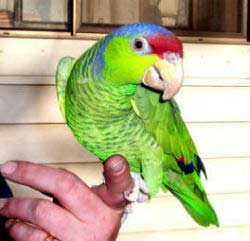
Please welcome Avi aka Avivit Keter

 ELLEN became a bird-mom (emah l'tsiporah) again today with the arrival of our new Lilac Crowned Amazon. He is named in Hebrew, Avivit Keter, literally Lilac Crown, but Ellen is already calling him Avi. He is darling.
Blessed art You, Lord our G!D, King of the universe, Who has such beauty in His world.
Thanks again to those of you who expressed  condolences to us when Tookee our parrot of 11 years passed in mid-December.
 
If we have not already wished you a happy new year, may 2008 be  a year where we are all blessed with a peace from Providence surpassing all understanding.
 
Shalom, love and a multitude of blessings,
Arthur and Ellen


Start the year off right. Easy ways to stay in shape in the new year.

Pirkei Avot - Ethics of the Fathers

A nice ten minute calming meditative video quoting wonderful Mishnaot from Pikei Avot- Ethics of the Fathers.
 
 
Blessings,
Rabbi Arthur Segal


Start the year off right. Easy ways to stay in shape in the new year.

Thursday, January 17, 2008

Talmud Discourse: A Wasted Friendship

One of Judaism's highest values, besides life itself, is Shalom. Without peace, both inside us and about us, we cannot even enjoy the gift of life that G!D has granted us.

Yet as flawed humans, we will continue to find ourselves in situations that detract from our serenity. At those times, it is imperative to draw upon the strength and wisdom that G!D provides us not to make matters worse, and to remember the teachings of our sages, and learn from their errors.

The Talmud tells the story of two friends who let an argument get in the way of their friendship. It is sad tale. It is from Tractate Bavli Bava Metzia 84 A.

Rabbi Yochanan who was becoming a respected Talmudic scholar and would eventually help redact the Yesushalmi Talmud was swimming in the Jordan River near his home in the Galilee. The Talmud relates many times how handsome Yochanan was.

Another fellow jumps into the Jordan. Yochanan recognizes him as Shimon ben Lakish, a gladiator and a bandit, as well as a Jew. Yochanan says to this muscular man : "Your strength was meant for Torah!"

"And your beauty was meant for women!" replied the robber.


"Do Teshuva, return to the Torah of your youth and you can marry my sister, who is even more beautiful than I !" countered Rabbi Yochanan.

The bandit, Shimon, agreed, and for 70 years these two men, now brother-in-laws, become Talmud study partners. The great Yochanan called Shimon his "right hand."

They argued about every Mishna but they were true friends.

Until the fateful day arrived. The question being discussed was : When can a sword, SAYIF , knife, SAKIN , a long knife, PAGYON  , spear , ROMACH , a hand sickle, MAGAL YAD, sickle for harvesting ,MAGAL KATZIR , become ritually unclean,(tamay)? 

All the rabbis agreed that these items can become ritually unclean  when the smith  is finished making them.

The question then was asked: " when is the manufacturing process complete?"

The younger rabbis turned to the elder rabbis Yochanan and Shimon for the answers.

 Sure enough, an argument ensued. Rabbi Yochanan said, "They can become ritually unclean from the time they are shaped by fire in the furnace." MISHE'YETZARFEM B'CHIVSHAN


Rabbi Shimon said, "They can become ritually unclean only after they have been polished with water." MISHE'YETZACHTZECHEN B'MAYIM


For those of us blessed to have studied and continue to study Talmud, we note an error in both rabbis' opinions.    The Mishnah on vessels and utensils (Kaylim) states when the manufacturing process is considered completed for each kind of knife or bladed object. Yochanan and Shimon's opinions disagree with the Mishna.   
 
"Well, a bandit surely knows banditry!" LISTA'AH B'LISTEYUSEI YADA exclaims Rabbi Yochanan, in response to Rabbi Shimon's answer. He brings up Rabbi Shimon's past for which he has certainly has done teshuvah (amends).


"What good have you done for me?" queries Rabbi Shimon. "Before, they my fellow robbers - called me, Rebbi, and here in the Yeshiva - they call me, Rebbi." (When Shimon was a bandit, he was the head of  a tribe of bandits).


"The good I have done for you," replied Rabbi Yochanan, "is that I have brought you under the wings of the Shechinah."


Rabbi Yochanan became so upset that he could not think straight

Rabbi Shimon ben Lakish became deathly sick from this argument. CHALASH REISH LAKISH

While Shimon lay dying, his wife ran to her brother. She begged Yochanan to pray for his friend Shimon. Rabbi Yochanan refused.

"Do it for his children so they will not become orphans."

Rabbi Yochanan answered by quoting the prophet, Jeremiah  (49:11), "She has left orphans, I will support them." AZVAH YESOMECHA, ANI ACHAYEH.


Yochanan's sister, Shimon's wife, yelled "Do it so I will not become a widow!"


Again her brother replied with a quote, the remainder of the verse from Jeremiah, "Your widows will trust in me." V'ALMENOSECHA ALAI TIVTACHU.


Raish Lakish died. NACH NAFSHEI D'REBBI SHIMON BEN LAKISH .

Rabbi Yochanan was very remorseful.HAVAH KA MITZTA'ER REBBI YOCHANAN BASREI TUVA. He had difficulty studying. Rabbi Elazar, the brightest student was sent to study with him.  Every time Rabbi Yochanan would say something, Rabbi Elazar would quote a bit of Mishna material to support it. He was the ultimate ''yes man."

Yochanan,  enormously frustrated, said to Rabbi Elazar, "Are you like Shimon?  Shimon would give me 24 questions and I'd give  24 answers. This is how  Talmud grows. All you do is support my opinion.'' Rabbi Yochanan turned away and began to cry. "Where is Shimon ben Lakish? Where is Shimon  ben Lakish?" He asked over and over again, screaming, HAVAH KA TZAVACH, until he became totally confused and lost his mind. AD D'SHAF DA'ATEI MINEI.

The Rabbis prayed that God have mercy and compassion for their colleague, Rabbi Yochanan. As a result, he, too, died.

What is the Talmud trying to teach us? The story of  a fight, literally to the death, is absurd. But when we look at our own lives, haven't we have arguments with people, even family members, over similar stupid things?

These two rabbis are not arguing over knives. They are arguing over Teshuvah, repentance, forgiveness.

You see, a knife cannot not become ritually impure. Only something that is considered ritually pure (Taharah) can become impure.

The question therefore is when does someone who returns to G!D, what we call a Ba'al Teshuvah, finish the process of amends making? When does a Ba'al Teshuvah become "taharah" so that this person can do something so profane to make themselves back to the way they were before they changed from their misguided ways?

The Teshuvah process is completed, according to Yochanan, when the past life has been burnt away making  a new person. 


The  process is completed, according to Shimon, (the Ba'al Teshuvah) when the person has been cleaned by water. Water is one of the Talmudic symbols for Torah. Even if the Ba'al Teshuvah still has elements of his past days, if he has adopted the yoke of Torah, and Mitzvoth, his Teshuvah is complete.

Yochanan bringing up Shimon's old knowledge of knives after all of these years is cruel. He is saying to Shimon that with all of his Torah and Talmud study,with all of his being a good husband to his sister, and with all of his mitzvoth, he is still a bandit.

Yochanan believes there is no life but a life ''of Torah''. He taught in Mishna Pirkie Avot  (5:22), "Turn the Torah over again and again, for everything is in it." Anything outside the world of Torah is unclean and impure. Yochanan lives in a world of white and black. Torah or not Torah. Pure or impure.

Rabbi Shimon lived a life "with Torah." Being a Jew, in modern terms, does not mean giving up the arts, or sports, or having non-Jewish friends (as long as they respect our religion and are not trying to covert us). We can live in a world of black and white, but that is mostly in shades of gray, using Torah and prayer to help us do what is right and just in G!D's eyes. Shimon's knowing about knives after 70 years of Talmud study, no more made him a bandit, then a Rabbi telling a mildly ribald joke to a group of adults makes him a pervert.

Yochanan's lament of  "Oh, Shimon ben  Lakish! Oh, Shimon ben Lakish! Where are you now?!" is too little, too late. It is too late to say, "I am sorry." It is too late to say," I was wrong." It is too late for Yochanan to do teshuvah, to make amends, to Shimon as he is dead.

Seventy years of Talmud study, along with being an author of the  Yesushalmi Talmud, and an angry moment is for what Yochanan is remembered.  Anger is an issue that the Sages discuss quite thoroughly. The Talmud [Bavli Tractate Nedarim 22 A,B] offers a number of varied teachings about anger: The Shechinah   is of no importance to those who get angry; one who gets angry forgets that which he has learned; all types of Gehinnom (Hell) rule over a person who gets angry. Elsewhere in the Talmud [Bavli Tractate Pesachim 66B], Rabbi Shimon ben Lakish taught that if a chacham (wise person) gets angry, his wisdom will leave him. Little did he know that he was forecasting his own death from the harsh words of his friend and brother-in-law, Rabbi Yochanan.

We can quote all of the Torah, Talmud, Midrash, Bible, we want. We can teach it to our children, or visit folks in hospitals and old age homes, and read Bible stories to them. We can even do an appointed time bound mitzvoth, like cooking and serving food to the needy, on a specific day and time. We can write checks to charity (tzadakah) or to our synagogues. But if we truly do not live a life ''with Torah", and are just living a life "of Torah," or ''using Torah'', we are only fooling ourselves. 

Let us not make the errors of Yochanan and Shimon. Let us heal wounds with friends and family. Let us be like the Talmudim (disciples) of Aaron, loving peace, (ahavath shalom), pursuing peace (rodef shalom) and bring people closer to Torah ,G!D, and to one another.  

Shalom v'brachoth:

Rabbi Arthur Segal


Start the year off right. Easy ways to stay in shape in the new year.

Wednesday, January 16, 2008

If anyone says, "I love God," yet hates his brother, he is a liar.

 
Dear S-----------------
 
In reference to your below game in which your friends send you emails describing you in 'one word,'
 
It is not so important what our friends think of us, but if we are rigorously honest with ourselves and are devoted to trying to do what is right and good in G!d's Holy Eyes, it is what G!d thinks of us.
 
Both the Rabbis of the Talmud, which precedes the New Testament by 500 years, and John state:'' 20If anyone says, "I love God," yet hates his brother, he is a liar. For anyone who does not love his brother, whom he has seen, cannot love God, whom he has not seen. 21And he has given us this command: Whoever loves God must also love his brother. (1 John. 4:20-21).''
 
Hence since all of us fail at the above, we are all liars and hypocrites. This is what G!D thinks of us. What our friends say doesn't matter.
It easy to love a friend. Where G!D calls on us to be our best, is to love those equally, who are not part of our inner circle. This is why the command of ''love your neighbor as yourself '' is followed with 'I am G!D." 
This is an oft overlooked phrase of the passage: I am God: "Let your love for  Me overcome your hatred for him, and keep you from taking revenge; in this way love vanquishes hatred, and peace will come  between you. This is the way of Torah, "whose ways are pleasant,  and all of whose paths are peace (Proverbs 3:17)".(Rabbi Yosef Bechor Shor)
 
 We have a way out however. Paul tells us this, as do the rabbis in the Talmud, and its making amends. It is not just a matter, Paul and the Rabbinic sages before him explain, of asking G!d for forgiveness, but we must amend to the  person we have snubbed, hurt, left out of our clique, not responded to his/her emails or calls of greetings, etc, especially when we are taught to ''greet each person cheerfully.''
 
There's a story in the Talmud, Masechet Derech Eretz (Chapter 4), which relates that once Rabbi Shimon ben Elazar was coming   from his teacher's house, and he was riding leisurely on his horse by the seaside. A certain man chanced to meet him, and the man was exceedingly ugly. Rabbi Shimon said to him, "Raka (simpleton), how ugly are the children of Abraham our father." The other man replied, "What can I do for you? Speak to the Craftsman Who made me." Rabbi Shimon immediately dismounted from his horse and bowed before the man and said, "I apologize to you, forgive me." He replied to him, "I will not forgive you until you go to the Craftsman Who made me and say, "How ugly is the vessel which You have made."

Rabbi Shimon walked behind him for three miles. When the people in town heard of the arrival of Rabbi Shimon, they came out to meet him and greeted him with the words, "Peace be unto you, rabbi." The other man said to them, "Who are you calling rabbi?" They answered, "The man who is walking behind you." Thereupon he exclaimed, "If this man is a rabbi, may there not be any more like him in Israel!" He told the people the whole story, and they begged him to forgive the rabbi, and he agreed, only on the condition that he never act in this manner again.

The Holy One created all kinds of people. We have to accept, welcome, and love that diversity God created, or else take those issues up with the Creator, not with the person who was created. Diversity is what makes each of us special. Inclusiveness, welcoming, and involvement with the diverse people who share this earth with us make us a holy community. Uniformity is destruction; diversity is our strength and our greatest hope.

It is not up to us to judge people based on the color of their skin, religion, or their gender, or their sexual orientation. If you have a problem with the fact that a person is a Jew, a woman, gay, or of a different skin color, discuss your problem with the One Who created people to be different, if you're so inclined. But remember that your problem is not with the created but with the Creator.
 
I have a friend,with a friend, whom he loves like a sister. For years he was there for her. In between husbands, thru bad marriages, problems with kids, sibling, her parents, etc.  And he, as a G!d loving Jew, believing in the Mishna's command of being a ''rodef shalom'', a pursuer of peace, spoke to her mom, to heal the rift. And he cried tears of joy for her when she finally remarried, this time looking like its blessed. And he loves her husband as if he is his brother.
 
And poof, never being told why,  even an email of Happy New Year, or a telephone call, goes unanswered. It is hurtful to him. He could say, but  he will not : "If this woman is a Christian, may there not be any more like her in Christendom!," but instead he prays each day for her. Jesus, as did the Rabbis of the Talmud, as well as Moses, taught that ''standing idly by'' while a person is suffering is immoral.
He knows that in G!D's eyes, he is right with Him. The problem lies with in her heart. Hence his prayers for her, and not any anger. Confusion, a bit. But in G!d's time, answers will come. He knows she is involved with a fundamentalist church now, and he knows their stance on Jews.
 
It is quite the opposite of the Jewish stance on others. Our Talmud in Tractate Sanhedrin tells us that the righteous of all nations have a equal share in the world to come. We do not tell non-Jews that they are going to hell if they do not believe. We do not even tell non observant Jews that they are going to hell. We are concerned about our behaviors towards one another in 'this' life.
 
Allow me to end, by mentioning the Talmudic parable of the chassida, or stork. Twice in the Torah we are given lists of birds, which according to the dietary laws, are not to be  eaten—the chassida is mentioned as an unkosher bird in Leviticus 11:19 and  Deuteronomy 14:18. 

The great medieval Biblical commentator Rashi, following an earlier Talmudic source, asks, "Why was this bird called chassida? Because it  does acts of chessed (loving-kindness), in sharing its food with other storks."

A 19th century rabbi asked, "Well, then, why isn't it Kosher? Because it does acts of loving-kindness with other storks, only with other storks and not with any other birds."

I would like to suggest that the stork here may be a symbol for religious  communities—their great strength, but also their problematic nature. The strength of closely-knit religious (or, for that matter, ethnic or other) communities is the mutual help and support they give to members of the in-group.

Unfortunately, they do not always behave in such humane ways towards outsiders or members of  other communities. The challenge for our religious communities is to behave towards each other like human beings, not like storks.
 
This is the lesson of Jesus, the Rabbinic sages before him, and what G!D wants for us.
 
We are better than storks. We were created in G!D's holy image. We are to love our fellow. What is hateful unto us we are not to do to another,  Rabbi Hillel teaches in our Talmud.
 
Let us no longer be liars and hypocrites in G!D's eyes, and indeed be the Christians and Jews we purport to be.
 
With shalom, and may G!D make 2008 full of peace for you and yours surpassing all understanding.
 
Love and many blessings,
Arthur
(Rabbi Arthur Segal)


Start the year off right. Easy ways to stay in shape in the new year.